
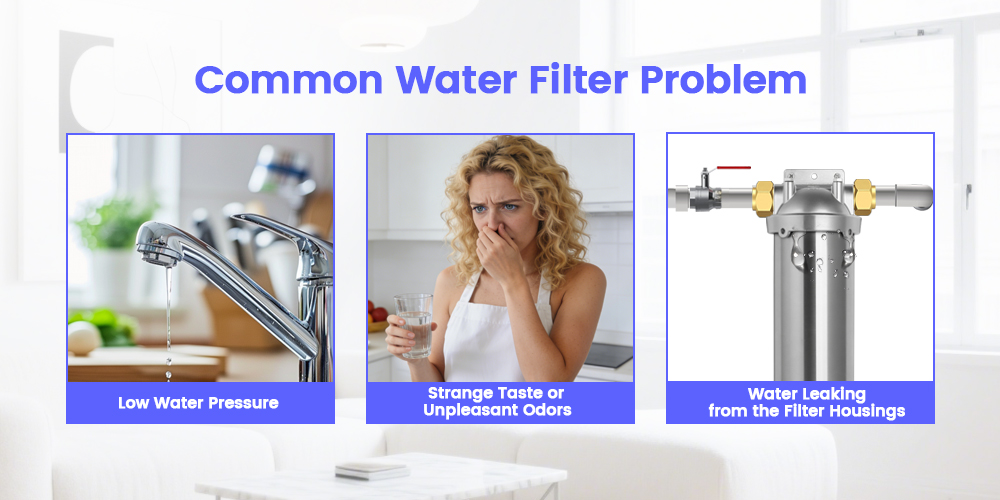
A high-quality water filtration system is the silent guardian of your home, ensuring that every drop of water from your faucet is clean, safe, and refreshing. However, like any mechanical system that processes thousands of gallons of water, issues can occasionally arise. Whether it is a sudden drop in water pressure or a strange taste in your morning coffee, knowing the basics of Water Filter Troubleshooting can save you from costly plumber visits and ensure your family remains protected.
At Amwater Filter, we believe that a well-maintained system is a lifetime system. In this comprehensive guide, we will walk you through the most common filtration issues and provide a clear, professional roadmap for Water Filter Troubleshooting.
Why Is Water Filter Troubleshooting Essential?

Problem: Low Water Pressure Throughout the House
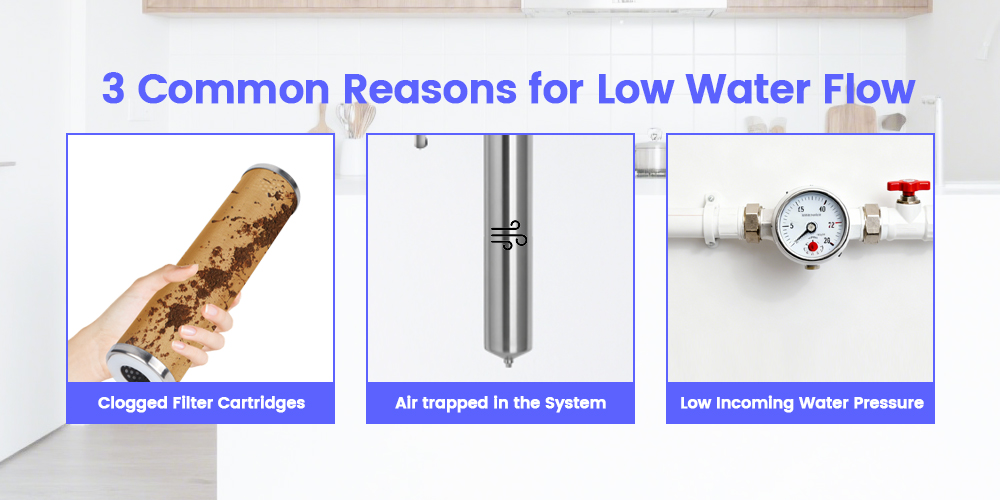
The Cause: Clogged Filter Cartridges
The Fix: Replace Your Sediment Filter
Problem: Strange Tastes or Unpleasant Odors
The Cause: Saturated Carbon Media
Most whole-house systems rely on activated carbon to remove chemical tastes and odors. Carbon works through adsorption, where chemicals stick to the surface of the carbon pores. Once those pores are full, the chemicals pass right through into your pipes. In some cases, old filters can even become a breeding ground for bacteria if left too long past their expiration date.
The Fix: Scheduled Maintenance
Problem: Water Leaking from the Filter Housing
The Cause: Damaged O-Rings or Improper Sealing
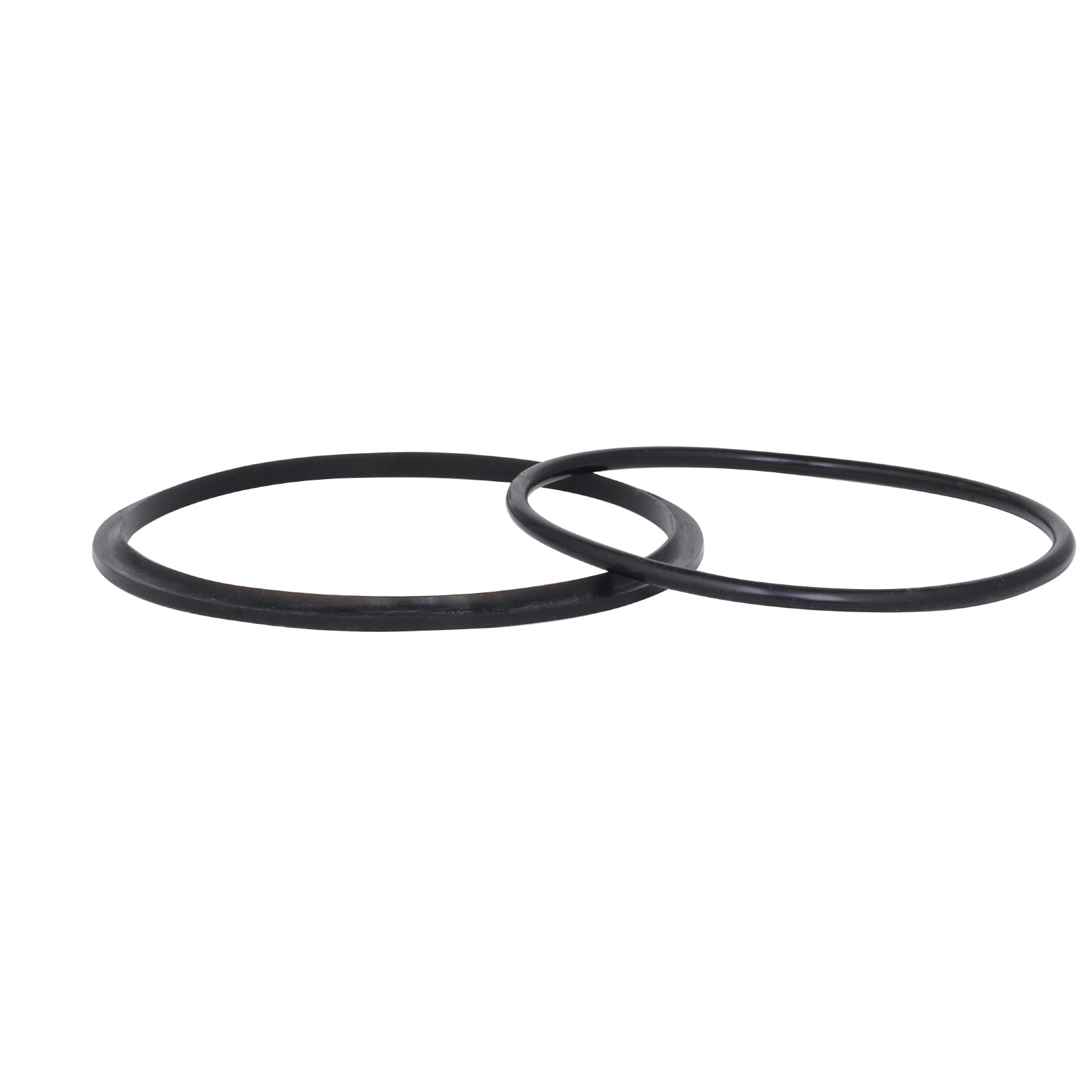
The O-ring is the rubber gasket that creates a watertight seal between the filter sump and the head. Over time, these rings can become dry, brittle, or pinched during a filter change. Additionally, high-pressure spikes in your home’s plumbing can sometimes compromise the seal of lower-quality plastic housings.
The Fix: Inspect and Lubricate
2. Unscrew the housing and remove the O-ring.
3. Inspect for cracks or flat spots. If it looks worn, replace it immediately.
4. Apply a thin layer of food-grade silicone grease to the O-ring to ensure a supple, tight seal.
5. If the housing itself is cracked, you must replace the entire unit to avoid a major flood.
Problem: Cloudiness or Bubbles in the Water
The Cause: Trapped Air
When you replace a filter, air enters the housing. When the water pressure is turned back on, this air is forced into the water stream in the form of millions of tiny micro-bubbles. This is not a sign of chemical contamination; it is simply physics.
The Fix: Flushing the System
Problem: The Filter System is Making Vibrating Noises
A humming or vibrating sound coming from your pipes when the water is running is known as water hammer or resonance.
The Cause: Pressure Fluctuations or Loose Fittings
Sometimes, the installation of a new, high-efficiency filter changes the flow dynamics of your plumbing. If the filter housing is not securely mounted to the wall, the vibration of the water passing through the media can cause a loud humming noise.
The Fix: Secure the Brackets
Ensure that your filter housing is mounted on a heavy-duty steel bracket. Check all connections and bypass valves to ensure they are fully open. If the noise persists, you may need a pressure-reducing valve (PRV) installed before the filter to stabilize the incoming municipal pressure.
Proactive Prevention: The Best Form of Troubleshooting
Step 1: Monitor Your Gauges
If your system includes pressure gauges before and after the filter, watch for a differential. A gap of more than 10-15 psi between the two gauges is a clear indicator that your filter is reaching the end of its life.
Step 2: Use Quality Components
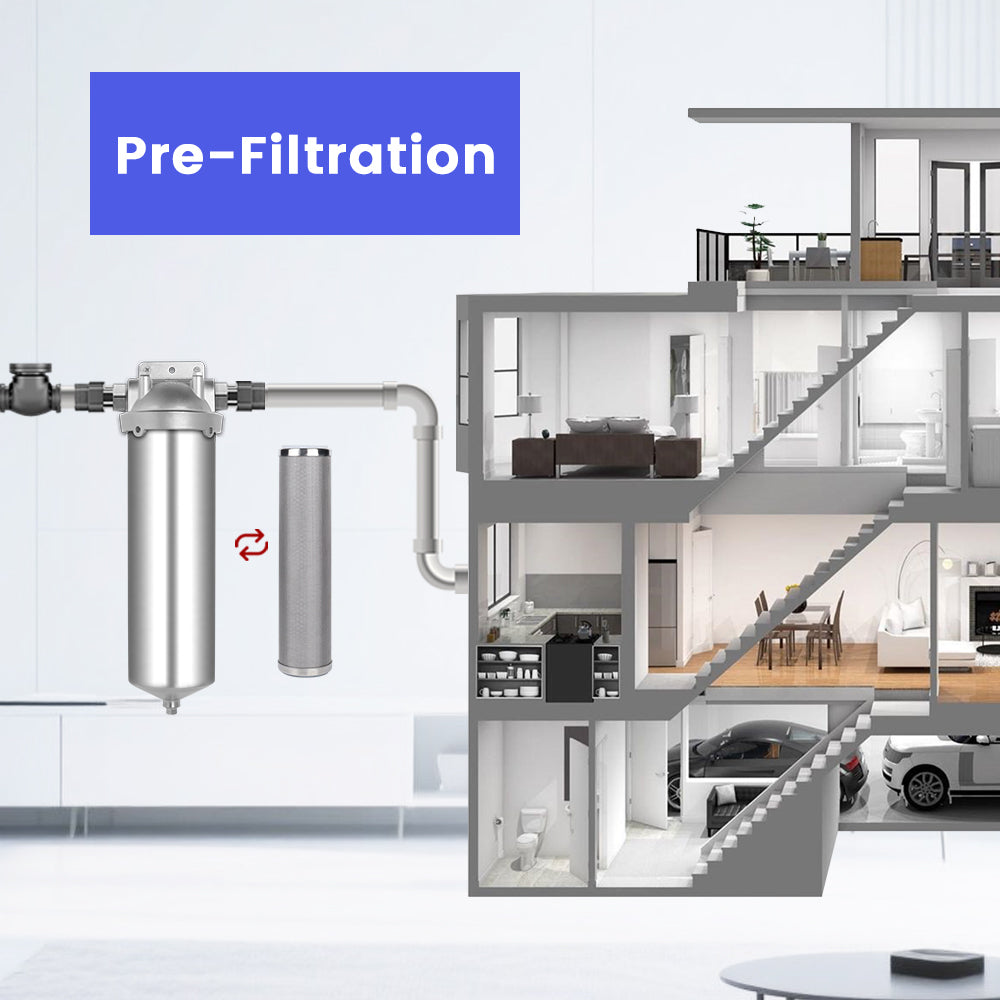
Many troubleshooting issues stem from using generic, low-quality replacement parts. Using a certified Whole House Sediment Water Filter Replacement from AM Water Filter ensures that the dimensions are exact, preventing bypass (where water goes around the filter instead of through it).
Step 3: Annual Sanitization
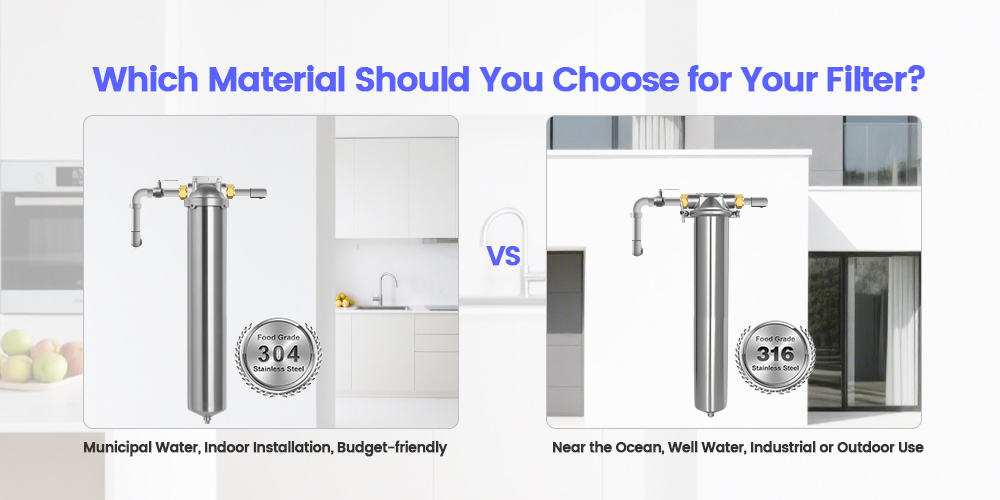
Once a year, during a filter change, take the time to clean the inside of your stainless steel or plastic housings. This prevents the accumulation of fine silt that can eventually clog valves and faucets downstream.
When to Call a Professional
• If you notice a significant drop in pressure that is not fixed by a new filter.
• If there is a leak in the main copper or PEX lines leading to the unit.
• If your water test results show bacterial contamination despite having a functioning UV or filtration system.
|
Symptom |
Primary Check |
Solution |
|
Low Flow Rate |
Sediment Build-up |
Install a new Whole House Sediment Water Filter Replacement
|
|
Chlorine Smell |
Carbon Exhaustion |
Replace Carbon Block or GAC filter |
|
Drip at Housing |
O-ring Integrity |
Lubricate or replace the rubber gasket |
|
Milky Water |
Air Pockets |
Flush faucets for 10 minutes |
|
Noisy Pipes |
Mounting Bracket |
Secure the housing and check pressure |
Conclusion
By keeping a stock of high-quality replacements on hand, such as our Whole House Sediment Water Filter Replacement, you can resolve 90% of water issues in under 15 minutes.
At AM Water Filter, we are dedicated to your water quality. For more technical guides, high-performance stainless steel housings, and premium replacement filters, visit us at Amwater.

Leave a comment
This site is protected by hCaptcha and the hCaptcha Privacy Policy and Terms of Service apply.