
Choosing the right material for your water filtration system is more than just a technical specification—it is about the safety of your family's drinking water and the long-term durability of your investment. At AMWater Filter, a common question we receive from homeowners and engineers alike is: 304 vs 316 Stainless Steel, which one should I choose?
While both metals look identical to the naked eye, the hidden chemical differences between them determine how they perform over years of constant exposure to water and pressure. In this guide, we will break down everything you need to know about 304 Stainless Steel and 316 Stainless Steel to help you make the best choice for your home.
What is 304 Stainless Steel?
Often referred to as food-grade stainless steel, 304 Stainless Steel is the most versatile and widely used stainless steel in the world. It is an austenitic alloy containing approximately 18% chromium and 8% nickel.
Because of its excellent corrosion resistance and value, 304 Stainless Steel is the industry standard for kitchen appliances, indoor plumbing fixtures, and residential water filter housings. Under normal municipal water conditions, it provides a sterile, rust-resistant environment that ensures your water remains pure and untainted.
What is 316 Stainless Steel?
If 304 is the industry standard, 316 Stainless Steel is the premium upgrade. It contains a similar amount of chromium and nickel but includes an essential addition: 2% to 3% molybdenum.
This extra ingredient significantly increases the metal's resistance to chlorides (like salt or sea water) and industrial chemicals. Often called marine-grade stainless steel, 316 Stainless Steel is designed for environments where standard metals would fail due to pitting or localized corrosion.
304 vs 316 Stainless Steel: The Critical Comparison
To decide between 304 vs 316 Stainless Steel for your filtration needs, we need to look at how they handle real-world challenges.
1.Corrosion and Pitting Resistance
The primary battleground for 304 vs 316 Stainless Steel is corrosion resistance.
• 304 Stainless Steel is highly resistant to oxidation from most oxidizing acids. However, it is susceptible to corrosion from chloride solutions (like high-chlorine tap water or salty air).
• 316 Stainless Steel excels in high-saline or high-chloride environments. The molybdenum creates a much stronger protective layer that prevents pitting—small, deep holes that can form in metal and eventually lead to leaks.
2. Lifespan in Harsh Environments
If you live in a coastal area or use a well-water system with high mineral content, the lifespan of your filter housing depends on the alloy. While 304 Stainless Steel might show surface tea-staining (brown spots) after a few years in salty air, 316 Stainless Steel will remain pristine and structurally sound for much longer.
3. Cost vs. Value
There is no denying that 316 Stainless Steel comes with a higher price tag. This is due to the cost of molybdenum and the more complex manufacturing process. For many, 304 Stainless Steel offers the best ROI for indoor, urban use, while 316 is a necessary investment for extreme conditions.
Why Stainless Steel Trumps Plastic in Water Filtration
Before choosing between 304 vs 316 Stainless Steel, it is important to understand why stainless steel is superior to plastic (blue/clear) filter housings:
• Pressure Resistance: Stainless steel can handle high-pressure spikes (water hammer) that would crack plastic housings.
• Chemical Leaching: High-quality stainless steel does not leach BPA or phthalates into your water.
• UV Protection: Unlike plastic, stainless steel does not degrade when exposed to sunlight, making it ideal for outdoor installations.
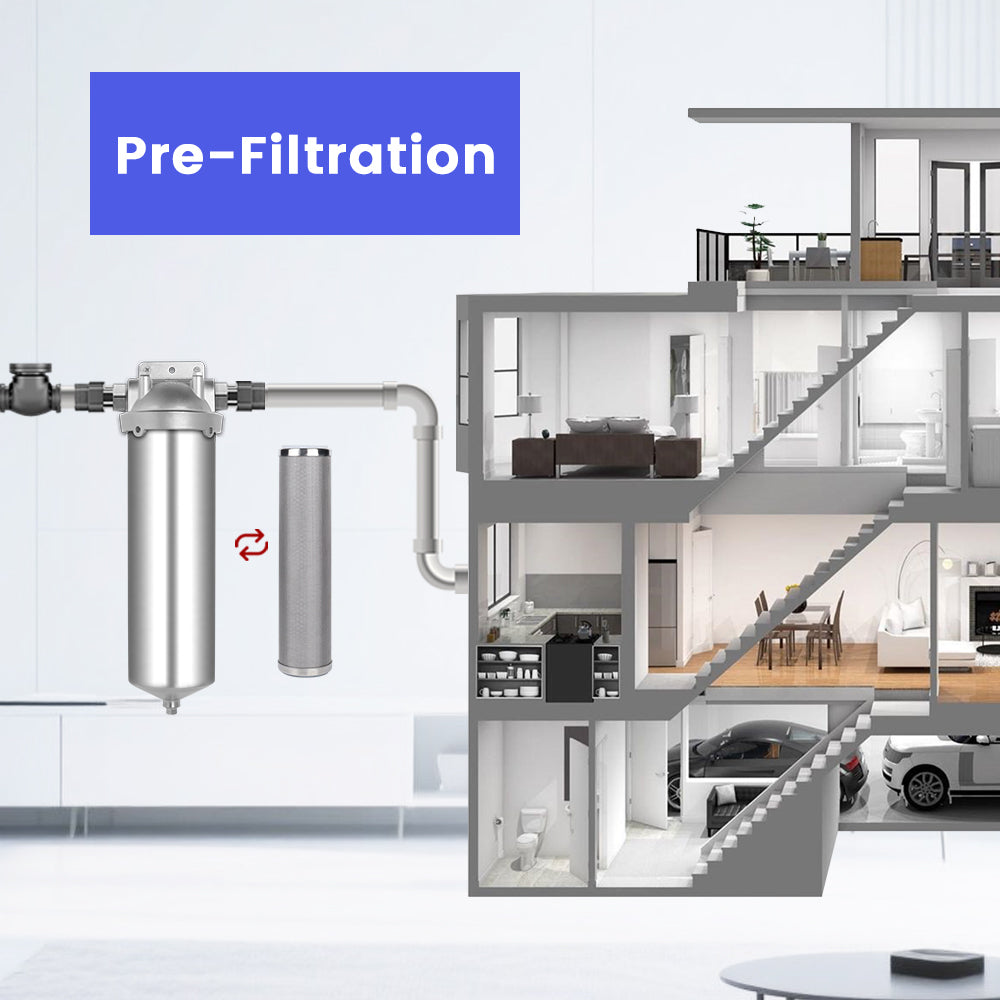
At AM Water Filter, we specialize in high-durability solutions. Our Whole House Water Filter Housing Clamp Head is engineered to leverage these metallic strengths, providing a secure, leak-proof seal that plastic alternatives simply cannot match.
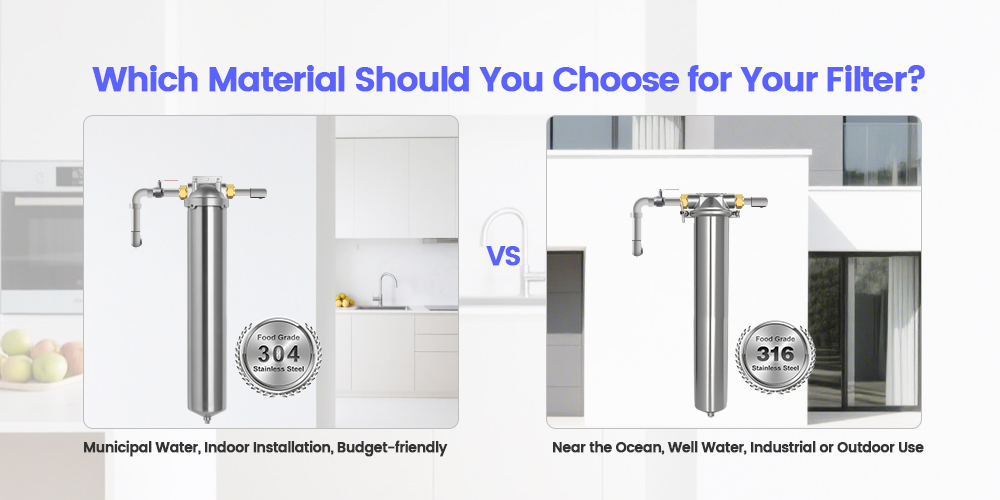
Which Material Should You Choose for Your Filter?

Choose 304 Stainless Steel If:
2. Indoor Installation: If your filter is installed in a basement, garage, or under the sink where it is protected from the elements.
3. Budget is a Factor: You want the strength of steel without the premium marine-grade price.
Choose 316 Stainless Steel If:
2. You Have Well Water: Some well water contains high levels of chlorides, sulfur, or other aggressive minerals that can degrade 304 Stainless Steel over time.
3. Industrial or Outdoor Use: For systems exposed to harsh weather, direct sunlight, or chemical cleaning agents.
Spotlight on Engineering: The AM Water Filter Advantage
Whether you select our housings in 304 Stainless Steel or 316 Stainless Steel, you benefit from:
• Precision Threading: Ensures a perfect fit with your existing plumbing, reducing the risk of leaks at the inlet and outlet.
• The Clamp Head Design: Traditional screw-on housings can become stuck over time due to mineral buildup. Our clamp head design allows for rapid filter changes without the need for heavy-duty wrenches.
• Heavy-Wall Construction: Our housings are built thicker than the industry average, providing an extra layer of safety against high-pressure bursts.
Final Verdict: 304 vs 316 Stainless Steel
In the debate of 304 vs 316 Stainless Steel, the right answer depends on your geography and your water chemistry.
For the vast majority of homeowners, 304 Stainless Steel provides a lifetime of clean, safe water at an unbeatable price point. It is tough, hygienic, and far superior to any plastic housing on the market. However, if you are in a high-corrosion zone or simply want the peace of mind that comes with the highest grade of protection available, 316 Stainless Steel is the ultimate choice.
At AM Water Filter, we believe in providing options that fit every lifestyle. By choosing a stainless steel housing, you are taking a significant step toward a plastic-free, sustainable, and safer home water system.

Leave a comment
This site is protected by hCaptcha and the hCaptcha Privacy Policy and Terms of Service apply.