
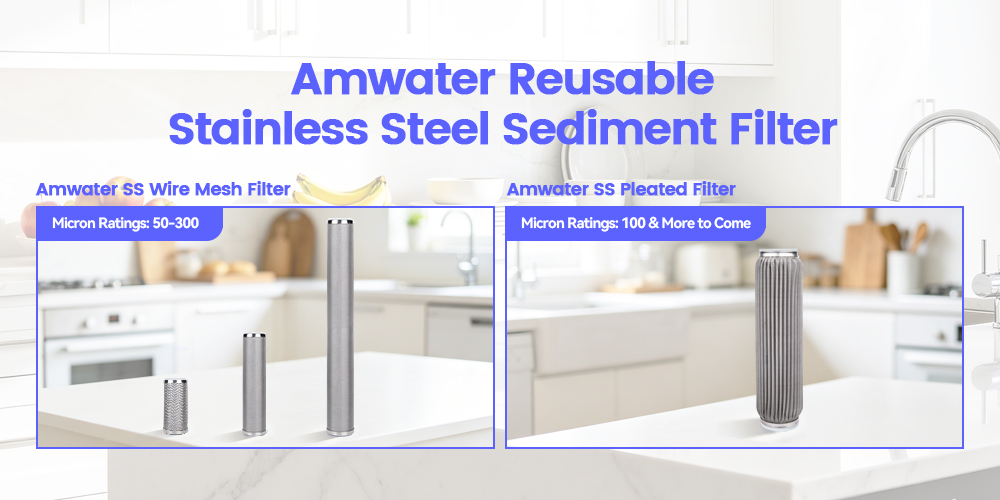
When shopping for a water filtration system, you'll often see specifications such as 1 micron, 5 micron, 20 micron, or even 50 micron. But what do these numbers actually mean, and how do they affect your water quality?
Understanding water filter micron rating is essential for selecting the right filtration system for your home, business, or well water application. The wrong micron size can either allow contaminants to pass through or unnecessarily reduce water flow and pressure.
In this guide, we'll explain what micron ratings are, how they impact filtration performance, and how to choose the best micron rating for your specific water treatment needs.
What Is a Water Filter Micron Rating?
A micron (μm) is a unit of measurement equal to one-millionth of a meter, or approximately 0.000039 inches.
A water filter micron rating indicates the size of particles that a filter can capture. The smaller the micron rating, the finer the filtration.
For example:
| Micron Rating | Typical Particles Removed |
| 50 Micron | Sand, large sediment |
| 25 Micron | Coarse dirt, rust flakes |
| 10 Micron | Fine sediment, visible particles |
| 5 Micron | Fine silt, sediment |
| 1 Micron | Very fine sediment, some microorganisms |
| 0.5 Micron | Cysts and microscopic contaminants |
Simply put:
Lower micron rating = finer filtration
However, smaller isn't always better. Choosing the ideal micron size depends on your water source and filtration goals.
Why Micron Rating Matters
Many homeowners focus on filter material or brand name while overlooking micron rating.
In reality, micron size directly affects:
- Filtration efficiency
- Water clarity
- Flow rate
- Water pressure
- Filter lifespan
- Maintenance frequency
A filter that is too fine may clog quickly and reduce water pressure.
A filter that is too coarse may allow unwanted particles to pass through.
Finding the right balance is the key to an effective filtration system.
Understanding Nominal vs Absolute Micron Ratings
When comparing water filters, you'll often encounter two important terms:
Nominal Micron Rating
A nominal-rated filter typically removes approximately 85% of particles at its stated micron size.
For example:
A 5-micron nominal filter captures about 85% of particles measuring 5 microns or larger.
Absolute Micron Rating
An absolute-rated filter removes at least 99% of particles at its specified micron size.
For example:
A 5-micron absolute filter captures nearly all particles that are 5 microns or larger.
Because absolute-rated filters provide more precise filtration, they are commonly used in applications requiring higher water quality.
Common Water Contaminants and Their Sizes
Understanding contaminant size helps determine the appropriate micron rating.
| Contaminant | Approximate Size |
| Visible sand | 50-200 microns |
| Human hair | 70 microns |
| Fine sand | 25 microns |
| Silt | 2-50 microns |
| Rust particles | 5-100 microns |
| Giardia cysts | 8-15 microns |
| Cryptosporidium | 4-6 microns |
| Some bacteria | 0.2-2 microns |
This is why a 50-micron filter may remove visible sediment but cannot effectively capture smaller contaminants.
What Is the Best Water Filter Micron Rating?
The answer depends on your water source and filtration objectives.
50-Micron Filters
Best for:
- Well water pre-filtration
- High sediment environments
- Large particle removal
Benefits:
- Excellent flow rate
- Minimal pressure loss
- Longer service life
Limitations:
- Cannot remove fine sediment
These filters are often used as the first stage in a multi-stage filtration system.
25-Micron Filters
Best for:
- Moderate sediment removal
- Pre-filtration applications
Benefits:
- Better sediment capture than 50-micron filters
- Maintains strong water flow
Many homeowners use 25-micron filters to protect downstream filtration equipment.
10-Micron Filters
Best for:
- General household filtration
- Municipal water systems
- Whole-house filtration
Benefits:
- Removes visible sediment
- Improves water clarity
- Balances filtration and flow rate
For many homes, a 10-micron filter provides an ideal balance between performance and maintenance.
5-Micron Filters
Best for:
- Fine sediment removal
- Whole-house water filtration
- Protecting appliances
Benefits:
- Removes smaller particles
- Enhances water quality
- Improves downstream filtration effectiveness
Many whole-house systems utilize 5-micron sediment filters because they effectively remove fine debris without excessively restricting water flow.
1-Micron Filters
Best for:
- Advanced filtration systems
- Drinking water treatment
- Cyst reduction
Benefits:
- Extremely fine filtration
- Removes microscopic contaminants
Limitations:
- Reduced flow rate
- More frequent filter replacement
These filters are typically used in conjunction with other filtration stages.
How Micron Rating Affects Water Flow Rate
One of the most important considerations is the relationship between micron size and flow rate.
As micron ratings become smaller:
- Filtration efficiency increases
- Water flow decreases
- Pressure drop increases
- Filter replacement frequency may increase
For example:
A 50-micron filter may allow significantly higher water flow than a 1-micron filter because larger pores create less resistance.
This is why professional water treatment systems often use multiple filtration stages rather than relying on a single ultra-fine filter.
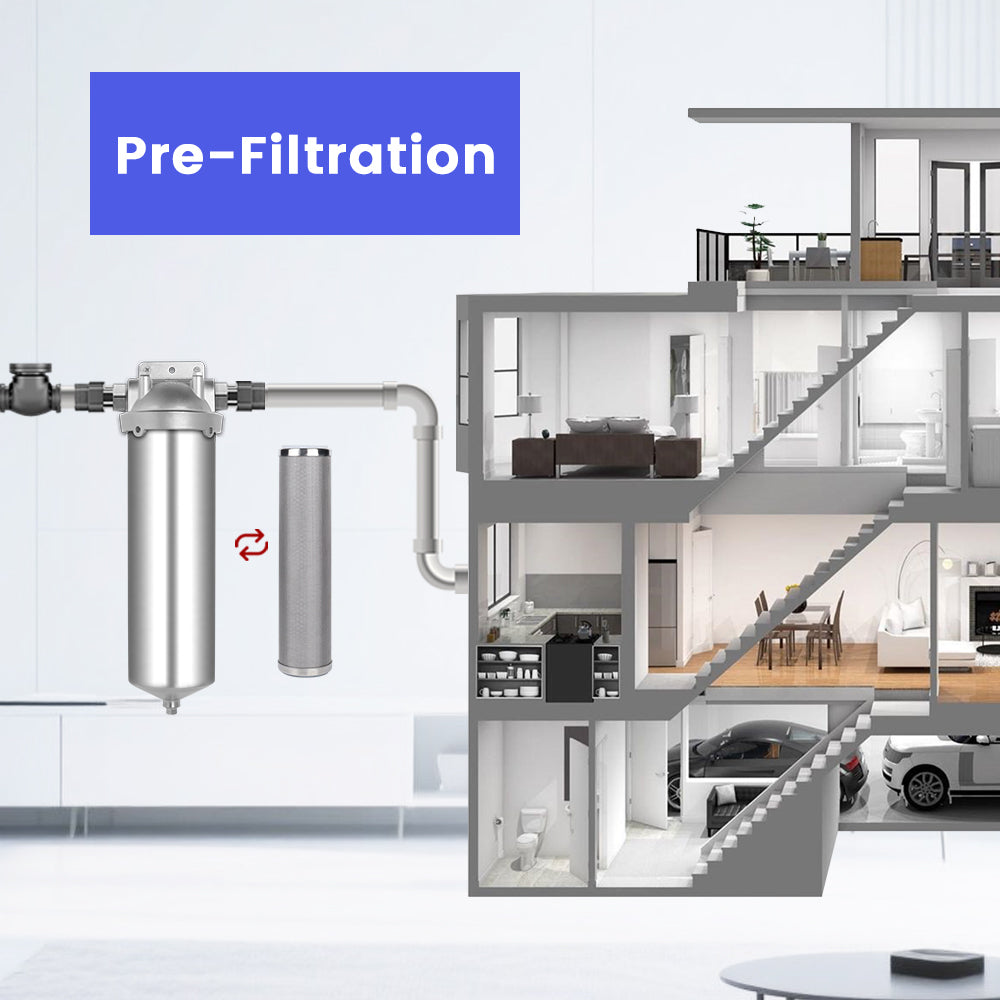
The Importance of Multi-Stage Filtration
Instead of using one extremely fine filter, many experts recommend a staged approach.
A typical whole-house setup may include:
Stage 1: Coarse Sediment Filter
Removes:
- Sand
- Dirt
- Large debris
Stage 2: Fine Sediment Filter
Removes:
- Rust
- Silt
- Fine particles
Stage 3: Carbon Filtration
Reduces:
- Chlorine
- Odors
- Chemical contaminants
This approach maximizes filtration efficiency while maintaining healthy water pressure.
Choosing the Right Micron Rating for Well Water
Well water often contains:
- Sand
- Silt
- Iron particles
- Sediment
For well water systems, a common recommendation is:
- 50-micron pre-filter
- 20 or 10-micron sediment filter
- 5-micron polishing filter
This layered approach helps extend filter life while providing excellent water quality.
Choosing the Right Micron Rating for City Water
Municipal water typically contains fewer large particles than well water.
For city water, homeowners often benefit from:
- 10-micron sediment filtration
- 5-micron sediment filtration
- Activated carbon filtration
This setup effectively removes sediment while improving taste and odor.
Recommended Whole-House Sediment Filtration Solution

A high-quality sediment filter is one of the most important components of any water treatment system.
The Whole House Sediment Water Filter Replacement from AM Water Filter is designed to capture dirt, rust, sand, and sediment before these contaminants reach your plumbing fixtures, appliances, and drinking water systems.
Benefits include:
- Effective sediment removal
- Improved water clarity
- Protection for downstream filters
- Extended appliance lifespan
- Enhanced filtration system performance
Whether you use municipal water or private well water, sediment filtration serves as the foundation of a reliable whole-house water treatment system.
Signs You Need a Lower Micron Filter
You may benefit from finer filtration if you notice:
- Cloudy water
- Sediment in sinks or tubs
- Frequent appliance maintenance
- Visible rust particles
- Dirty filter cartridges
However, always verify water quality through testing before switching to an extremely fine filter.
Frequently Asked Questions
Is a lower micron water filter always better?
No. Smaller micron ratings provide finer filtration but can reduce water pressure and clog more quickly.
What micron filter is best for whole-house filtration?
Most homeowners find that 5 to 10 microns provide an excellent balance between filtration efficiency and flow rate.
Can a 5-micron filter remove bacteria?
Most bacteria are smaller than 5 microns. Additional treatment technologies such as UV purification or specialized membrane filtration may be required.
How often should sediment filters be replaced?
Replacement frequency depends on water quality and usage. Homes with high sediment levels may require more frequent changes.
Final Thoughts
Understanding water filter micron rating is one of the most important factors when selecting a water filtration system. While lower micron ratings offer finer filtration, the best choice depends on your water source, contamination level, and desired flow rate.
For most residential applications, 5-micron and 10-micron sediment filters provide the ideal balance of filtration performance and water pressure. When combined with a quality whole-house filtration system, the right micron-rated filter can significantly improve water quality, protect appliances, and extend the lifespan of your entire water treatment setup.
By choosing the appropriate micron rating and using reliable filtration components such as AM Water Filter's Whole House Sediment Water Filter Replacement, homeowners can enjoy cleaner, clearer, and more dependable water every day.


Leave a comment
This site is protected by hCaptcha and the hCaptcha Privacy Policy and Terms of Service apply.