Copper is a paradoxical element. While it is an essential micronutrient for human health in trace amounts, having too much of it in your water supply is a serious concern. Whether you are noticing blue-green stains in your sinks, a metallic tang in your morning coffee, or managing industrial discharge, understanding how to remove copper from water is critical for safety and compliance.
At AMWater Filter, we specialize in high-performance filtration solutions designed to tackle heavy metals. In this comprehensive guide, we will explore the sources of copper contamination and the most effective methods to eliminate it from your home, pool, or facility.
Overview: Goals for Removing Copper
The primary goal of copper removal is to bring levels down to safe, palatable, and legal limits. The EPA has established a Maximum Contaminant Level Goal (MCLG) of 1.3 mg/L (or 1.3 ppm) for copper in drinking water.
This guide is designed for:
- Homeowners concerned about aging plumbing or well water quality.
- Pool Owners dealing with hair discoloration or liner staining.
- Industrial Operators needing to meet strict wastewater discharge permits.
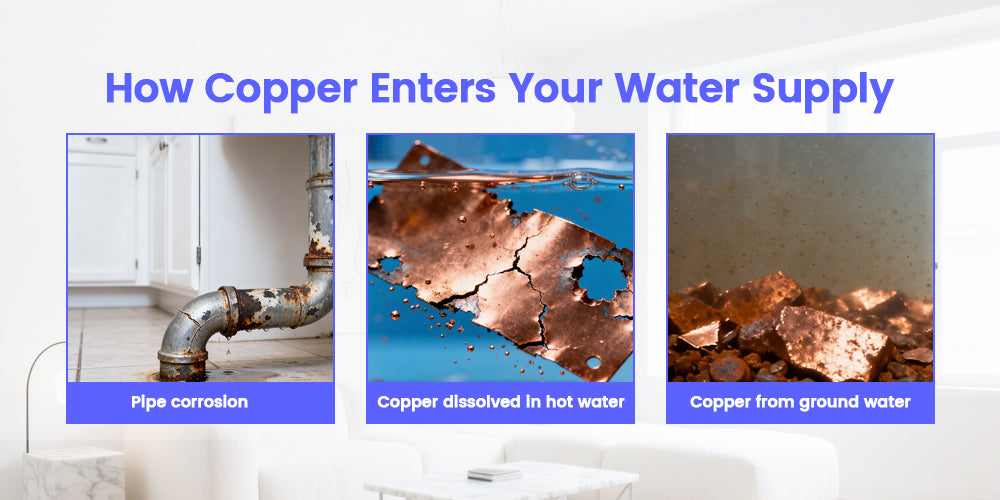
How Copper Enters Your Water Supply
Copper rarely occurs naturally in high concentrations in source water. Instead, it usually finds its way into your glass through human-made systems.
1. Pipe Corrosion
The most common cause of elevated copper is the corrosion of interior household plumbing. If your water is acidic (low pH) or has high mineral content, it can "eat away" at copper pipes and brass faucets, leaching the metal into your tap water.
2. Temperature and Stagnation
Temperature plays a massive role. Hot water dissolves copper much faster than cold water. Furthermore, the longer water sits stagnant in your pipes (like overnight), the higher the copper concentration becomes.
3. Industrial and Environmental Runoff
For those on private wells, copper can enter the groundwater via industrial mining, farming runoff (from copper-based pesticides), or industrial waste.
Test and Monitor Before Removing Copper
You cannot manage what you do not measure. Before investing in a system, you must determine the concentration of copper in your water.
- Certified Lab Testing: This is the gold standard. A lab can tell you the exact parts per million (ppm) and help identify if the copper is "dissolved" or "particulate."
- At-Home Test Kits: These are affordable and provide quick results, but they lack the precision needed for borderline safety cases.
- Testing Frequency: If you use a private well, test annually. For municipal users, test if you notice blue staining or if you’ve recently replaced plumbing components.
Effective Copper Removal Methods
Once you've confirmed the presence of copper, it's time to choose a treatment strategy. Here are the most reliable ways to remove copper from water.
1. Reverse Osmosis (RO) for Removing Copper
Reverse Osmosis is widely considered the most effective residential solution. It works by forcing water through a semi-permeable membrane that blocks 97% to 98% of copper ions.
- Efficiency: Extremely high for both dissolved and particulate copper.
- Installation: We recommend a point-of-use RO system under the kitchen sink for drinking and cooking water.
- Maintenance: RO systems function best when pre-filters are replaced every 6 to 12 months and the primary membrane every 2 years. Adhering to this schedule ensures the system continues to effectively reduce heavy metals from your water supply.
2. Ion Exchange
This process uses specialized resin beads to swap copper ions for harmless ions (like sodium).
- Best For: Low-to-moderate copper levels in relatively clear water.
- Consideration: The resin requires periodic regeneration with a brine solution. The "backwash" or wastewater from this process will contain the concentrated copper and must be disposed of according to local rules.
3. Chemical Precipitation (Mainly Industrial)
For high-volume wastewater, chemical precipitation is the standard.
- Hydroxide Precipitation: Adding a base (like lime) raises the pH, causing copper to turn into solid particles that settle out.
- Sulfide Precipitation: Even more effective than hydroxide but requires careful handling of chemicals to avoid toxic gas.
- Note: This creates "sludge," which must be dewatered and treated as special waste.
4. Adsorption (Activated Carbon and Zeolite)
Standard activated carbon filters are excellent for taste and odor but have limited capacity for heavy metals. However, modified carbon or natural zeolites can be very effective at adsorbing copper.
- Advanced filtration systems often utilize KDF (Kinetic Degradation Fluxion) media, which employs a redox reaction to specifically target and remove copper and other heavy metals from the water supply.
Removing Copper From Industrial Wastewater
Industrial facilities face much tighter regulations than households. The approach usually follows a hierarchy:
- Assess Concentration: High concentrations (over 50 mg/L) usually require chemical precipitation.
- Polishing: Low-concentration streams use Ion Exchange or Membrane Filtration to reach "ultra-low" discharge limits.
- Copper Recovery: In some electronic or plating industries, it is more cost-effective to recover the copper via electrowinning and recycle it back into production.
Pool Water: Testing and Copper Removal
If your hair turns green or your pool walls have dark stains, you likely have a copper problem—often caused by copper-based algaecides or heat exchanger corrosion.
- Safe Range: Keep pool copper levels below 0.2 ppm.
- Sequestrants: These chemicals "lock" the copper in the water so it can't stain surfaces, but they don't actually remove it.
- Metal Removers: Specialized chelating filters or chemical treatments are required to physically pull the metal out of the water.
Choosing Point-of-Use vs. Whole-House Removal
|
Feature |
Point-of-Use (POU) |
Whole-House (POE) |
|
Best For |
Drinking and Cooking |
Bathing and Appliances |
|
Cost |
Lower upfront and maintenance |
Higher installation cost |
|
Copper Source |
Best if copper is in the source water |
Required if copper is in source water |
|
Limitation |
Doesn't protect pipes |
Won't stop copper leaching after the filter |
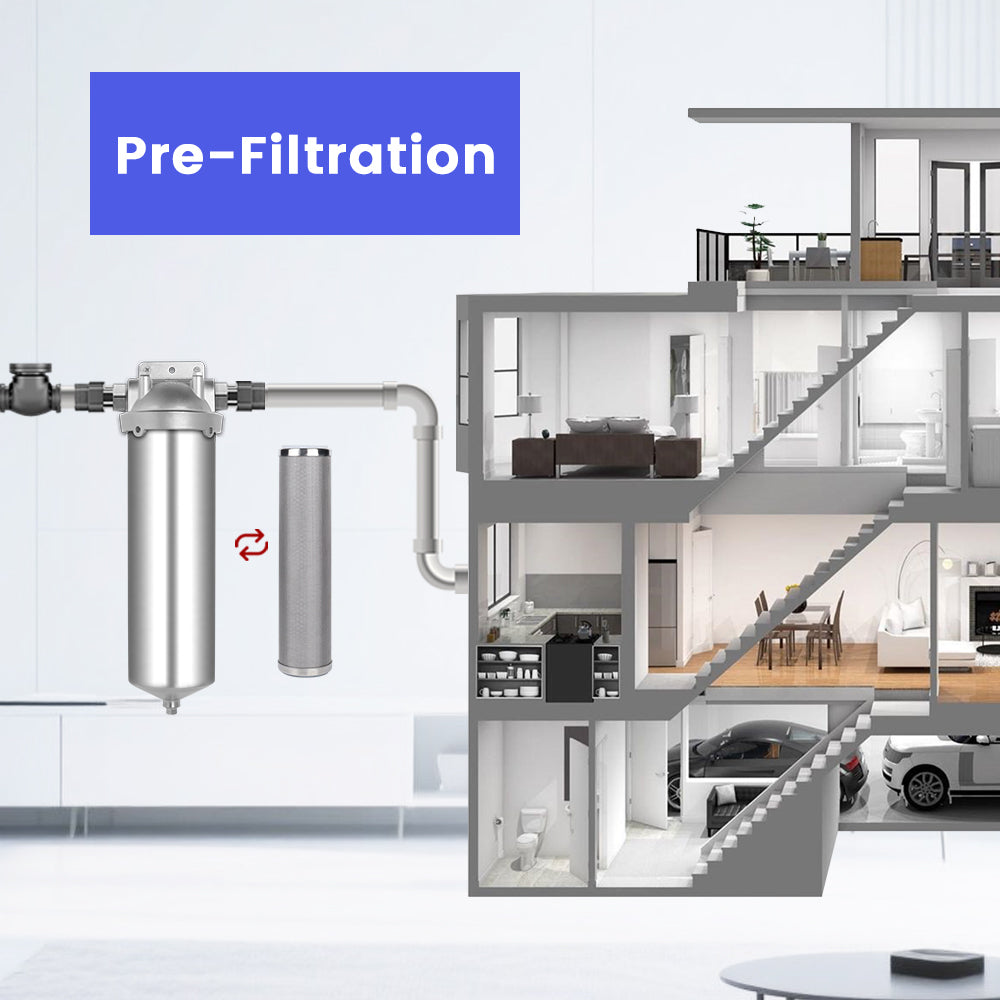
Important Note: If your copper problem is caused by your home's own pipes, a whole-house filter at the entry point won't help. The water will be clean as it enters, but it will pick up copper as it travels to your faucet. In this case, while a high-performance AMWater POE (Point-of-Entry) Water Filtration System is the most practical safeguard to purify water before it enters your plumbing, you may still need to address older household pipes to ensure total water safety at every tap.
Maintenance and Short-Term Fixes
If you are waiting for a filtration system to be installed, follow these "best practices" to minimize exposure:
- The 30-Second Flush: Always run your cold water tap for at least 30 seconds before using it for drinking or cooking if the water has been sitting for hours.
- Cold Water Only: Never use water from the hot tap for drinking or making baby formula. Hot water is far more likely to contain high levels of leached copper.
Content Extras: Copper Removal FAQ
Is copper in water dangerous?
In the short term, high levels cause gastrointestinal upset (nausea, vomiting). Long-term exposure can lead to liver and kidney damage, especially in children.
Does boiling water remove copper?
No. Boiling water actually increases the concentration of copper because the water evaporates while the heavy metal stays behind.
How do I stop my pipes from leaching copper?
Correcting the water chemistry is key. Implementing a professional corrosion control system or a dedicated pH balancing unit can neutralize acidity, effectively preventing the metal in your pipes from dissolving into your drinking water.
Decision Flowchart: Selecting Your Treatment
- Is copper level > 1.3 ppm? * Yes: Proceed to treatment.
- Is the source your pipes or the city/well?
- Pipes: Use Point-of-Use RO and adjust pH.
- Source: Use Whole-House Filtration + RO for drinking.
- Is it for a large factory?
- Yes: Consult a specialist for Chemical Precipitation and Ion Exchange.
Next Steps
Don't guess when it comes to heavy metals. Your first step should always be a professional water analysis. Once you have your results, the team at AMWater Filter is here to help you select the exact system needed to restore your water's purity.


Leave a comment
This site is protected by hCaptcha and the hCaptcha Privacy Policy and Terms of Service apply.