
Clean water is the lifeblood of a healthy home. From the water you drink to the water that runs through your dishwasher and shower, the quality of your water supply directly impacts your well-being and the longevity of your plumbing system. However, many homeowners—especially those on well water—struggle with "dirty" water filled with sand, grit, and rust.
This is where the best spin down sediment filter becomes a game-changer. Often acting as the "first line of defense," these filters are designed to tackle the heavy lifting of water purification. In this guide, we will explore exactly what a spin down filter is, how it works, and why it is a critical investment for your home.
Introduction to Filtration Systems
Without this initial barrier, large sediment can cause a domino effect of problems:
• Clogged Fixtures: Grit can get stuck in faucet aerators and showerheads, ruining water pressure.
• Appliance Damage: Sediment acts like an abrasive, wearing down the internal seals of washing machines, dishwashers, and expensive tankless water heaters.
• Filter Burnout: If you have a fine carbon filter or a Reverse Osmosis (RO) system, large sediment will clog those expensive cartridges in weeks instead of months.
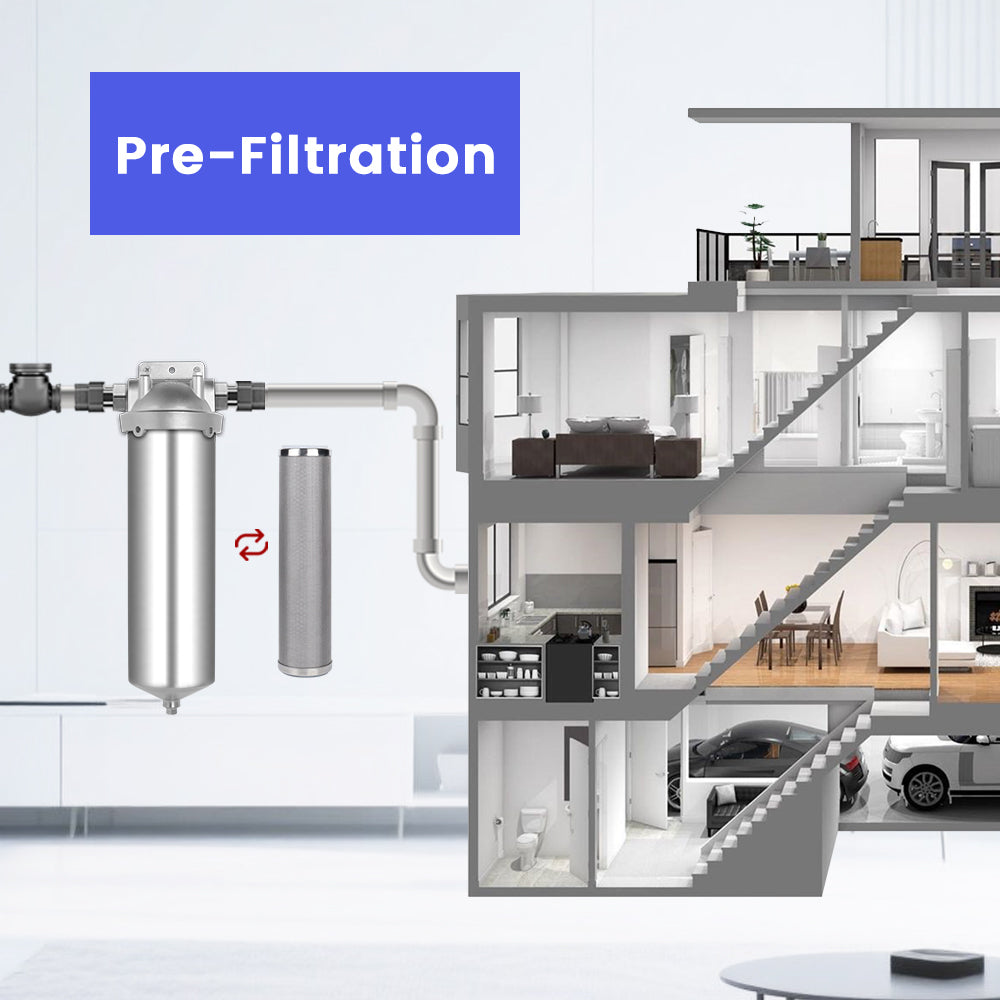
By installing the best spin down sediment filter, you are essentially placing a "bouncer" at the door of your plumbing system, ensuring only the cleanest water proceeds.
Types of Sediment Filters: Which One Do You Need?

Spin Down Filters
Sediment Trapper Filters
Cartridge Filters (Melt-Blown or String-Wound)
Finer Filters
These include pleated filters or ultra-filtration membranes. They offer a larger surface area for capturing fine silt, but they are very sensitive. If you don't use a spin down filter as a pre-filter, these fine filters will clog almost instantly.
|
Filter Type |
Best For |
Maintenance |
|
Spin Down |
Large sand, grit, rust |
Flush via valve (Reusable) |
|
Sediment Trapper |
Very heavy sand/debris |
Flush via valve (Reusable) |
|
Cartridge Filter |
Fine silt and "cloudy" water |
Replace cartridge (Disposable) |
Key Features of the Best Spin Down Sediment Filters
• Transparent Housing: High-quality filters use a clear, high-impact polymer (like our pressure-tested bowls) that allows you to see the sediment buildup. If you see sand at the bottom, you know it's time to flush.
• Flush Valve: A simple ball valve at the bottom of the housing makes maintenance a 5-second task. No tools required—just turn the handle and let the pressure push the sediment out.
• Durable Materials: While many brands use cheap plastic or brass, the AMWater Spin Down Filter features a 304 stainless steel head. This resists corrosion and handles water hammer (pressure spikes) much better than standard materials.
• High Flow Rate: A good spin down filter shouldn't starve your house of water. Our models support up to 25-50 GPM (gallons per minute), meaning you won't notice a drop in pressure even when multiple showers are running.
How Spin Down Filters Work: The Science of Centrifugal Force
The magic of a spin down filter lies in its name: Spin.
Entry: Water enters the filter head and is diverted into the clear chamber at a high velocity.
The Spin: The internal "diverter" causes the water to spin in a rapid, centrifugal motion.
Separation: Because sand and rust are heavier than water, the centrifugal force flings these particles to the outside of the chamber.
Settling: The particles hit the wall and fall down to the "sediment trap" at the bottom of the clear housing, away from the water stream.
Screening: The water then passes through a fine stainless steel mesh screen.Any remaining particles that didn't settle are caught by this mesh.
Clean Exit: The clean, screened water exits through the center of the filter and into your home's plumbing.
This process is purely mechanical, meaning it requires no electricity and adds no chemicals to your water.
The Importance of Micron Rating and Mesh Size
A micron is a unit of measurement equal to one-millionth of a meter.For context, a human hair is about 70 microns wide.
• 40–60 Microns: This is the "Sweet Spot" for the best spin down sediment filter. A 40-micron screen is fine enough to catch visible sand and grit but coarse enough that it won't clog every five minutes.
• 100+ Microns: These are "coarse" screens. They are best used for irrigation systems or extremely "trashy" well water to catch pebbles and large chunks of rust.
• Mesh Size vs. Micron: They are two sides of the same coin. "Mesh" refers to the number of holes per square inch.A higher mesh number equals a smaller micron rating (more holes = smaller holes).
Benefits of Using a Spin Down Filter

Protects Your Investment
Reduces Maintenance Costs
Maintains Water Pressure
Eco-Friendly and Sustainable
Applications: Well Water vs. City Water
Well Water Systems
City Water Systems
Why AMWater Filter Offers the Best Spin Down Sediment Filter
• Aviation-Grade Materials: Our transparent bowls are tested to withstand high pressure and extreme temperatures.
• Food-Grade 304 Stainless Steel: We avoid leaded brass and cheap plastics in our filter heads to ensure your water stays pure.
• Universal Compatibility: With dual-thread designs (3/4" and 1/2" options), our filters fit almost any American plumbing setup without needing complex adapters.
Conclusion: Your Journey to Truly Clean Water
Whether you are battling a sandy well or just want to ensure your city water is as clear as possible, choosing the best spin down sediment filter is the smartest first step you can take.

Leave a comment
This site is protected by hCaptcha and the hCaptcha Privacy Policy and Terms of Service apply.