Understanding the lifespan of your water treatment components is the difference between crystal-clear water and a compromised plumbing system. A common question among users is: how long do home water filtration systems last? While a high-quality AMwater system housing can last over a decade, the internal cartridges and media have much shorter, specific expiration dates that vary based on technology and water chemistry.
Quick Overview: How Long Filters Last
Typically, individual filter cartridges last between 3 to 6 months, while large-scale whole-house media tanks can function for 5 to 10 years before requiring a media refill. The biggest factors that shorten this life include high sediment levels, heavy chlorine concentrations, and high daily water consumption.
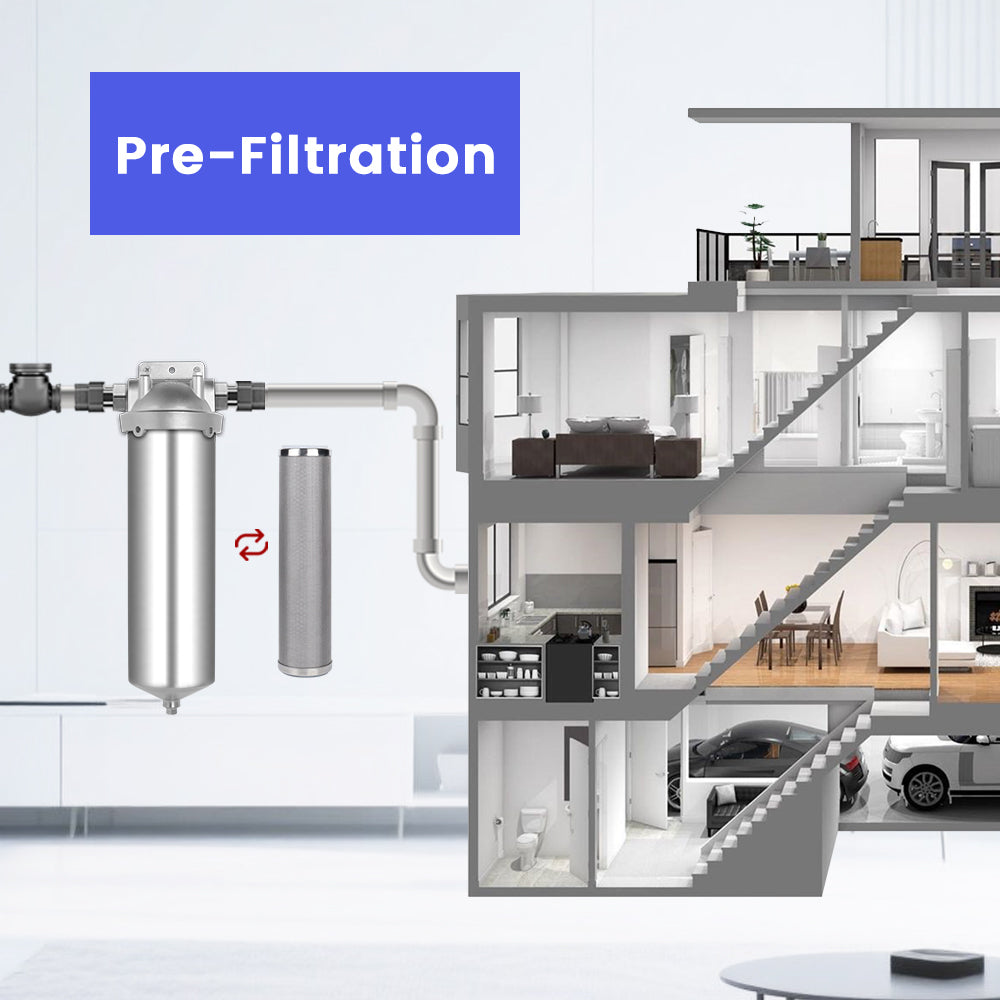
Whole-House Filtration System Lifespan
A whole-house system is composed of several parts, each with its own "expiration date":
• Filtration Media: Most carbon or KDF media lasts 5 to 7 years depending on usage.
• System Tanks: High-quality fiberglass tanks are often rated for 10 to 15 years of service.
• Control Valves: The mechanical "brain" of the system usually requires maintenance or replacement every 7 to 10 years.
• Household Size: A family of six will exhaust media twice as fast as a household of two, significantly impacting the system's total lifetime.
• Filtration Media: Most carbon or KDF media lasts 5 to 7 years depending on usage.
• System Tanks: High-quality fiberglass tanks are often rated for 10 to 15 years of service.
• Control Valves: The mechanical "brain" of the system usually requires maintenance or replacement every 7 to 10 years.
• Household Size: A family of six will exhaust media twice as fast as a household of two, significantly impacting the system's total lifetime.
Replacement Schedules for Common Filter Types
To keep your water pure, follow these general tier-based schedules:

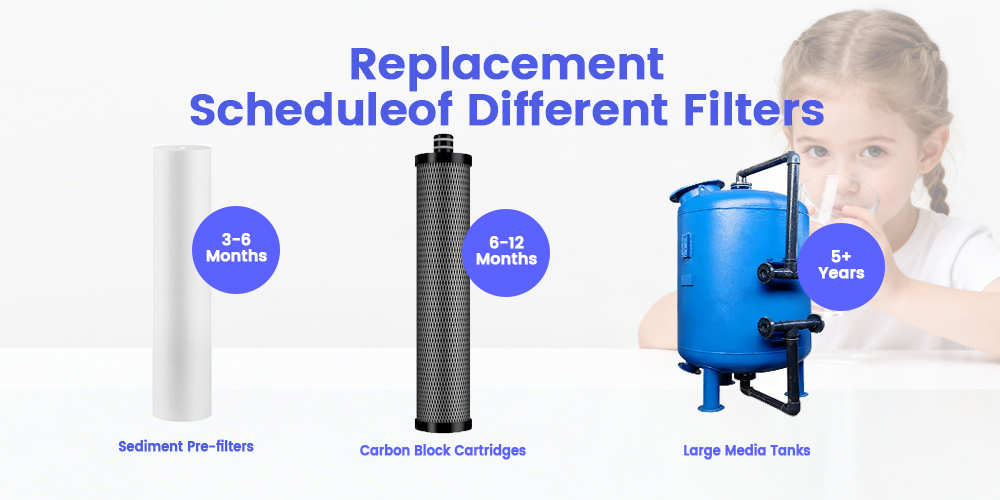
- Standard Sediment Pre-filters: Every 3–6 months.
- Carbon Block Cartridges: Every 6–12 months.
- Large Media Tanks: Every 5+ years.
We recommend tracking both gallons processed and months in service to determine the most accurate change interval for your specific home.
Pitcher Filters and Small Cartridges
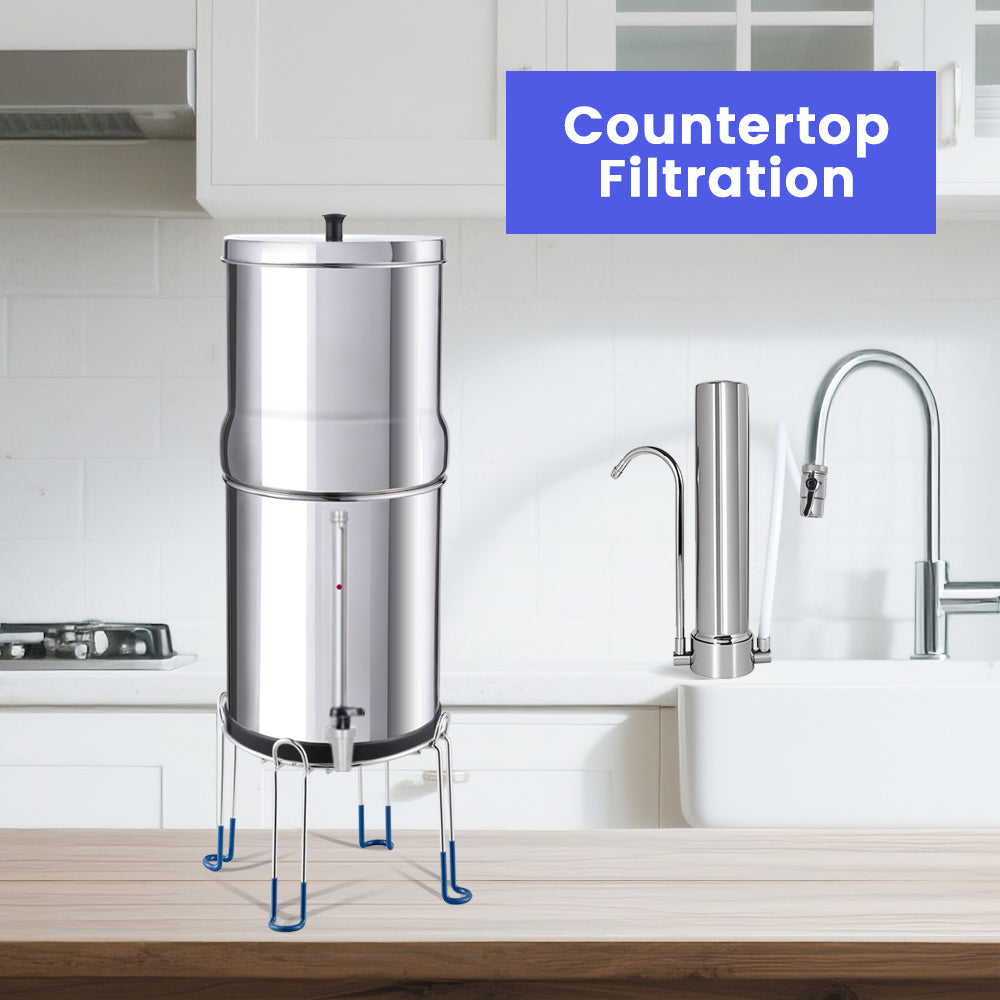
While not whole-house solutions, many homes use these as point-of-use additions.
• Typical Lifespan: Most pitcher filters last 2 months or roughly 40 gallons.
• When to Replace: Replace these immediately if water flow slows significantly or if you notice a return of chlorine taste.
• Typical Lifespan: Most pitcher filters last 2 months or roughly 40 gallons.
• When to Replace: Replace these immediately if water flow slows significantly or if you notice a return of chlorine taste.
Sediment, Carbon Filters, and Activated Carbon Media
Different technologies wear out at different rates:
• Sediment Cartridges: These act as the first line of defense. Products like the should be changed every 3 to 6 months to prevent clogging the more expensive downstream filters.
• Standard Carbon Filters: These use adsorption to remove chemicals; once all "sites" on the carbon are filled, the filter is exhausted.
• Catalytic Carbon: This is a specialized version of carbon designed to remove hydrogen sulfide and chloramines. It generally has a shorter lifespan than standard carbon when faced with high sulfur levels.
• Sediment Cartridges: These act as the first line of defense. Products like the should be changed every 3 to 6 months to prevent clogging the more expensive downstream filters.
• Standard Carbon Filters: These use adsorption to remove chemicals; once all "sites" on the carbon are filled, the filter is exhausted.
• Catalytic Carbon: This is a specialized version of carbon designed to remove hydrogen sulfide and chloramines. It generally has a shorter lifespan than standard carbon when faced with high sulfur levels.
Whole-House Media (Carbon/KDF/Pro-Ox) Lifespans
For large, backwashing tank systems, the media lifespans are more robust:
• Activated Carbon: Usually lasts 3 to 5 years in a whole-house tank.
• KDF-55/85: Can last up to 6 years due to its heavy-duty oxidation-reduction capabilities.
• Pro-Ox and Iron Media: These typical iron-removal media last 5 to 7 years.
• Backwashing Advantage: Regularly scheduled backwashing flushes out trapped debris, preventing media from packing down and extending its functional life by several years.
• Activated Carbon: Usually lasts 3 to 5 years in a whole-house tank.
• KDF-55/85: Can last up to 6 years due to its heavy-duty oxidation-reduction capabilities.
• Pro-Ox and Iron Media: These typical iron-removal media last 5 to 7 years.
• Backwashing Advantage: Regularly scheduled backwashing flushes out trapped debris, preventing media from packing down and extending its functional life by several years.
Reverse Osmosis and Membrane Lifespan
RO systems require a multi-stage maintenance approach:
• RO Pre-filters: Must be replaced every 6 to 12 months to protect the membrane from chlorine.
• RO Membrane: The heart of the system typically lasts 2 to 3 years if the pre-filters are maintained correctly.
• RO Pre-filters: Must be replaced every 6 to 12 months to protect the membrane from chlorine.
• RO Membrane: The heart of the system typically lasts 2 to 3 years if the pre-filters are maintained correctly.
What Affects Filter Life?
Not every 6-month filter actually lasts 6 months. Your lifespan is dictated by:
• Water Quality: High turbidity (cloudiness) or heavy iron content will "blind" a filter prematurely.
• Usage Volume: A house that uses 500 gallons a day will exhaust filters much faster than a vacation home.
• Build Quality: Cheap, off-brand filters often have less surface area, leading to a shorter operational life compared to OEM-standard replacements.
• Water Quality: High turbidity (cloudiness) or heavy iron content will "blind" a filter prematurely.
• Usage Volume: A house that uses 500 gallons a day will exhaust filters much faster than a vacation home.
• Build Quality: Cheap, off-brand filters often have less surface area, leading to a shorter operational life compared to OEM-standard replacements.
Water Pressure, Flow, and System Design
Your home’s plumbing performance provides clues about filter health:
• Low Pressure: A drop in water pressure usually signals that a filter is clogged with sediment and needs immediate replacement.
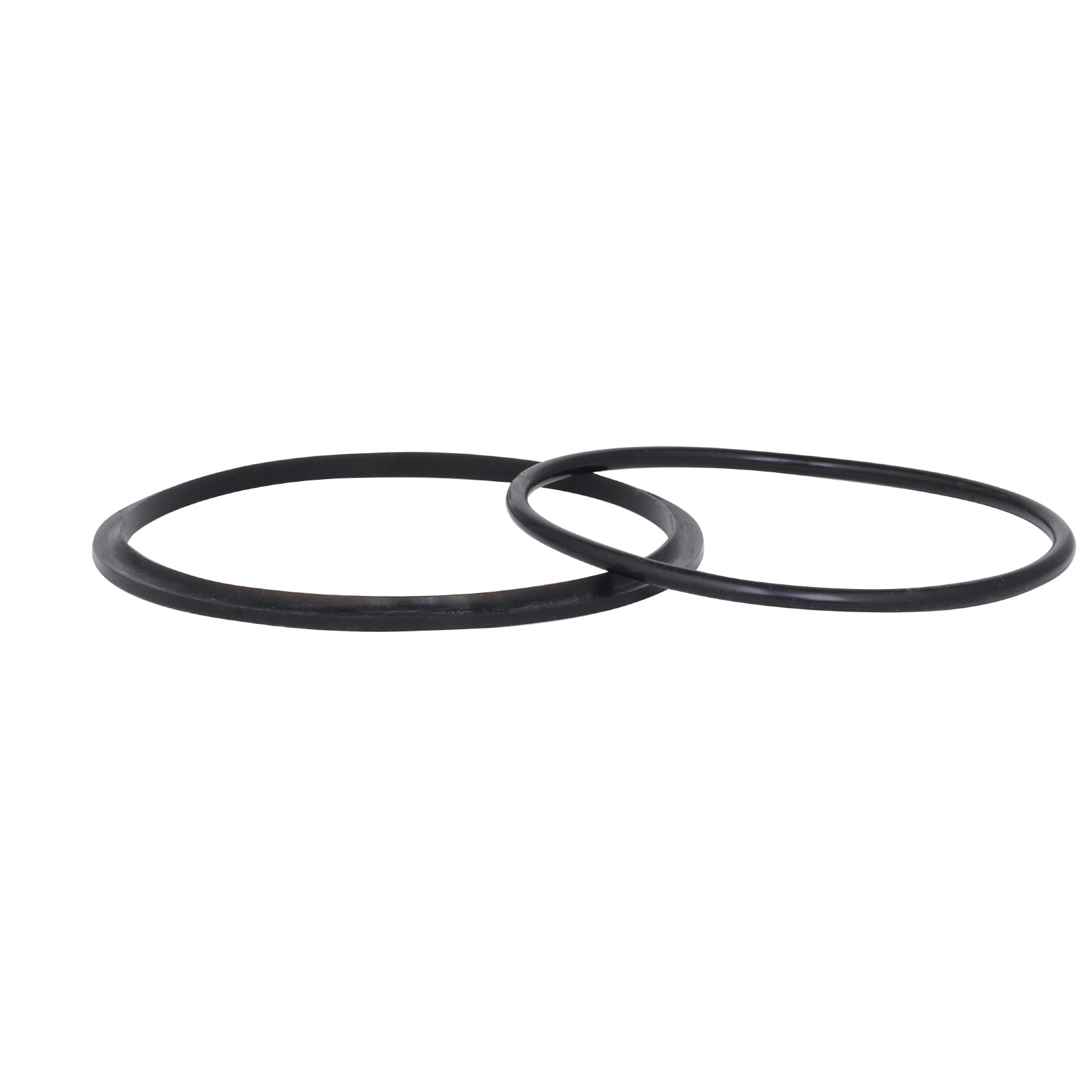
• High Pressure Stress: Conversely, excessively high incoming pressure can stress filter housings and O-rings, potentially causing leaks.
• Monitoring: We recommend installing pressure gauges both before and after the filter to monitor the "pressure drop"—once the difference exceeds 10-15 psi, it is time for a change.
• Low Pressure: A drop in water pressure usually signals that a filter is clogged with sediment and needs immediate replacement.
• High Pressure Stress: Conversely, excessively high incoming pressure can stress filter housings and O-rings, potentially causing leaks.
• Monitoring: We recommend installing pressure gauges both before and after the filter to monitor the "pressure drop"—once the difference exceeds 10-15 psi, it is time for a change.
Maintenance, Backwashing, and Filter Changes
Proper care can save you thousands in premature replacements:
• Maintenance Calendar: Set a recurring digital or physical reminder for filter inspections.
• Backwash Cycles: Follow the manufacturer’s schedule strictly; skipping backwashes leads to "channeling," where water bypasses the media entirely.
• Pre-filter Priority: Always replace your sediment pre-filters on time. A $30 sediment filter protects a $1,000 media tank.
• Maintenance Calendar: Set a recurring digital or physical reminder for filter inspections.
• Backwash Cycles: Follow the manufacturer’s schedule strictly; skipping backwashes leads to "channeling," where water bypasses the media entirely.
• Pre-filter Priority: Always replace your sediment pre-filters on time. A $30 sediment filter protects a $1,000 media tank.
How To Tell When an Old Filter Needs Replacement
If you have lost track of the date, look for these sensory and technical signs:
• Sensory Cues: The return of chlorine odors, metallic tastes, or visible sediment in your glassware.
• Delta-Pressure: Check the pressure gauges; a significant "delta" (difference) indicates a blockage.
• Water Testing: If you suspect the system is failing, use a basic home water test kit to check for contaminants the system is supposed to remove.
• Sensory Cues: The return of chlorine odors, metallic tastes, or visible sediment in your glassware.
• Delta-Pressure: Check the pressure gauges; a significant "delta" (difference) indicates a blockage.
• Water Testing: If you suspect the system is failing, use a basic home water test kit to check for contaminants the system is supposed to remove.
How To Extend Filter Life and Best Practices
• Quality First: Use high-quality replacements like the to ensure proper fit and filtration.
• Flush New Cartridges: Always flush new carbon filters for 5–10 minutes before use to remove carbon "fines" (dust) that can clog fixtures.
• Professional Inspection: Have a plumber or water specialist inspect your system valves and tanks annually.
• Flush New Cartridges: Always flush new carbon filters for 5–10 minutes before use to remove carbon "fines" (dust) that can clog fixtures.
• Professional Inspection: Have a plumber or water specialist inspect your system valves and tanks annually.
Managing Replacement Filters and Disposal
• Storage: Keep spare filters in a cool, dry place; moisture can cause mold growth even in unused filters.
• Labeling: Use a permanent marker to write the installation date directly on the filter housing or cartridge.
• Disposal: Most used filters can be disposed of in standard household trash. For large media tanks, contact a local waste management site to see if the media requires special handling.
• Labeling: Use a permanent marker to write the installation date directly on the filter housing or cartridge.
• Disposal: Most used filters can be disposed of in standard household trash. For large media tanks, contact a local waste management site to see if the media requires special handling.
Decision Guide: Replace Filters vs. Replace System
• Replace Filters Only: If the water quality has dipped but the housing is intact and less than 10 years old.
• Replace Entire System: If the tank is leaking, the control valve is obsolete and cannot be repaired, or the cost of new media and labor exceeds 50% of a new system's price.
• Analysis: Perform a cost-versus-age analysis every 7 years to see if a more efficient, modern system would save you money in the long run.
• Replace Entire System: If the tank is leaking, the control valve is obsolete and cannot be repaired, or the cost of new media and labor exceeds 50% of a new system's price.
• Analysis: Perform a cost-versus-age analysis every 7 years to see if a more efficient, modern system would save you money in the long run.
Quick Checklist for Filter Changes and Monitoring
• Monthly: Check pressure gauges for drops.
• Quarterly: Inspect pre-filters for heavy sediment buildup.
• Annually: Conduct a water test and professional valve check.
• Post-Replacement: Always flush the system for 10 minutes to clear air and debris.
By maintaining a strict schedule and using premium replacements from , you can ensure your home's water remains safe and your AMwater filtration system lasts for its full intended lifespan.
• Quarterly: Inspect pre-filters for heavy sediment buildup.
• Annually: Conduct a water test and professional valve check.
• Post-Replacement: Always flush the system for 10 minutes to clear air and debris.
By maintaining a strict schedule and using premium replacements from , you can ensure your home's water remains safe and your AMwater filtration system lasts for its full intended lifespan.


Leave a comment
This site is protected by hCaptcha and the hCaptcha Privacy Policy and Terms of Service apply.