
One of the most common concerns homeowners have when considering a water treatment solution is the impact on their daily comfort. You want pure, clean water, but you don't want your invigorating morning shower to turn into a weak drizzle. The question "Do whole house water filters reduce water pressure?" is a valid one.
At Amwater Filter, we believe you shouldn't have to choose between water purity and water performance. In this comprehensive guide, we will explore the relationship between filtration and flow, and provide actionable solutions to ensure your home enjoys the best of both worlds.
Introduction to Whole House Water Filters
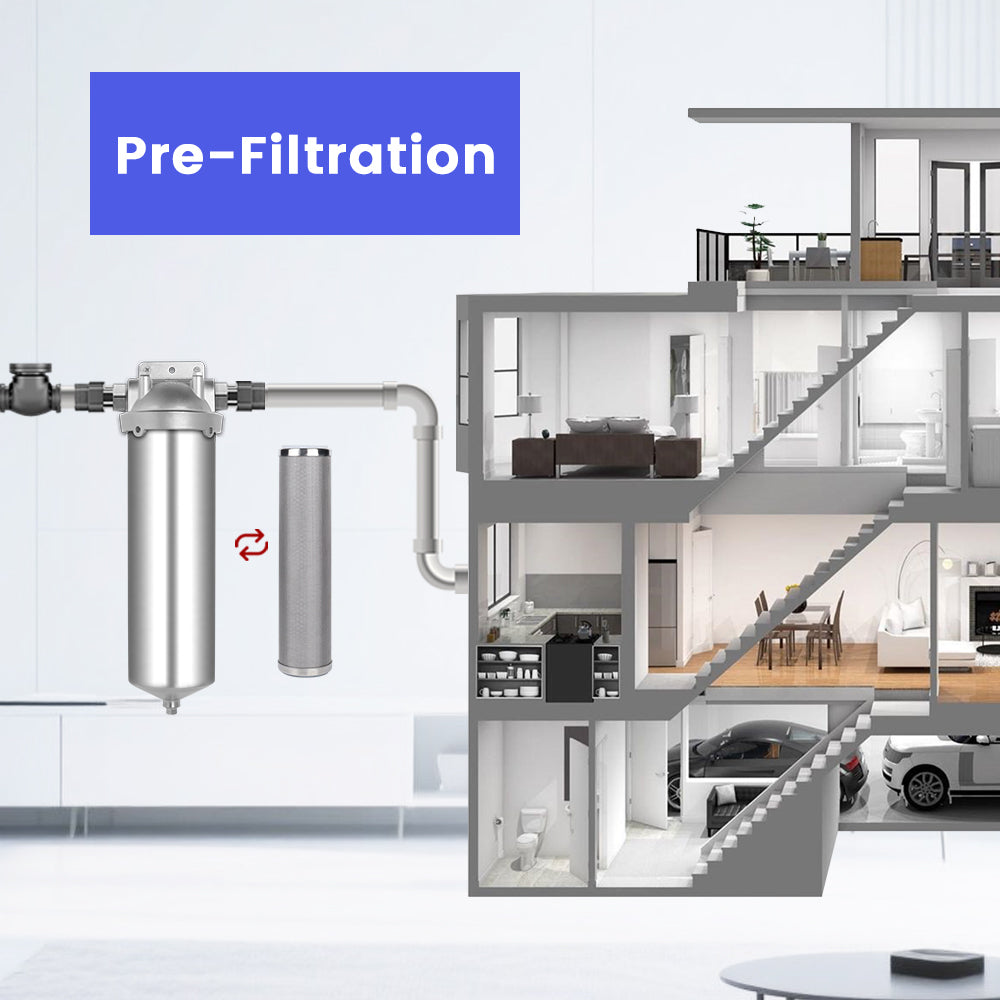
A whole house water filter, also known as a Point-of-Entry (POE) system, is a comprehensive solution designed to intercept contaminants at the very moment they enter your home’s plumbing.From the kitchen tap to the laundry machine and the showerhead, every drop is treated.
While it is a common myth that these systems "kill" water pressure, the reality is more nuanced. Every filtration media—whether it is a Sediment Filter or an Activated Carbon Block—creates a slight amount of resistance. This resistance is what allows the filter to trap impurities. However, with proper sizing, high-quality components, and a regular maintenance schedule, this impact is usually so minimal that the average user will never notice it.
While it is a common myth that these systems "kill" water pressure, the reality is more nuanced. Every filtration media—whether it is a Sediment Filter or an Activated Carbon Block—creates a slight amount of resistance. This resistance is what allows the filter to trap impurities. However, with proper sizing, high-quality components, and a regular maintenance schedule, this impact is usually so minimal that the average user will never notice it.
Understanding Water Pressure: The Basics
Before we dive into the filters themselves, it is important to understand what "normal" looks like. Water pressure is the force that drives water through your pipes, measured in Pounds per Square Inch (PSI).
The average household water pressure typically ranges between 40 and 60 PSI. Most modern appliances and plumbing fixtures are designed to operate optimally within this window. When you install a whole house system, a "pressure drop" of 2 to 3 PSI is entirely normal and expected. This is simply the energy required to push the water through the microscopic pores of the filter media.
However, if you experience a drop of 10 PSI or more, you aren't dealing with a "normal" filter effect—you are likely dealing with a technical issue, a clog, or an incorrectly sized system.
The average household water pressure typically ranges between 40 and 60 PSI. Most modern appliances and plumbing fixtures are designed to operate optimally within this window. When you install a whole house system, a "pressure drop" of 2 to 3 PSI is entirely normal and expected. This is simply the energy required to push the water through the microscopic pores of the filter media.
However, if you experience a drop of 10 PSI or more, you aren't dealing with a "normal" filter effect—you are likely dealing with a technical issue, a clog, or an incorrectly sized system.
Factors That Affect Water Flow
It is crucial to distinguish between pressure (force) and flow rate (volume). Flow rate is measured in Gallons per Minute (GPM). While a filter might only slightly reduce PSI, it can significantly impact GPM if the system is too small for your home’s needs.
Several factors influence how a filter interacts with your water flow:
• Micron Rating: This is the size of the "holes" in the filter. A 5-micron filter is more restrictive than a 20-micron filter. While smaller microns remove more contaminants, they also require more force to pass through.
• Filter Surface Area: A larger filter (like a 20-inch "Big Blue" housing) has more surface area, allowing more water to pass through simultaneously compared to a slim 10-inch model.
• Pipe Diameter: If your main water line is 1 inch but you install a filter with 1/2-inch ports, you have created a permanent bottleneck that will drastically reduce flow.
Several factors influence how a filter interacts with your water flow:
• Micron Rating: This is the size of the "holes" in the filter. A 5-micron filter is more restrictive than a 20-micron filter. While smaller microns remove more contaminants, they also require more force to pass through.
• Filter Surface Area: A larger filter (like a 20-inch "Big Blue" housing) has more surface area, allowing more water to pass through simultaneously compared to a slim 10-inch model.
• Pipe Diameter: If your main water line is 1 inch but you install a filter with 1/2-inch ports, you have created a permanent bottleneck that will drastically reduce flow.
Common Causes of Low Pressure in Filtered Homes
If you notice a sudden or gradual decline in your water pressure, it is rarely the fault of the system's design. Instead, it is usually one of the following culprits:

Clogged Filter Cartridges
By definition, a filter's job is to get dirty. Over time, the sediment, rust, and silt it traps fill up the pores of the media. As the filter reaches its capacity, the "path" for water becomes narrower, leading to a significant pressure drop. This is the most common reason for low pressure and is a clear signal that it's time for a replacement water filter.
Undersized Systems
If you have a 4-bathroom home but installed a system rated for a 1-bedroom apartment, the system simply cannot keep up with the demand. When two showers and a dishwasher run at the same time, the pressure will crater because the GPM capacity is too low.
Sediment Pre-filter Saturation
In many multi-stage systems, the first stage is a Melt-Blown Polypropylene Sediment Filter. This stage bears the brunt of the "heavy lifting." If your water has high sediment levels, this pre-filter can clog in a matter of weeks, choking the rest of the system.
Solutions to Pressure Issues: How to Restore the Flow
If you are experiencing pressure issues, don't remove the filter just yet! There are several effective ways to restore your flow:
Proper Sizing from the Start
When choosing a system from Amwater Filter, always check the GPM rating. For a standard 3-bedroom home, we recommend a system capable of at least 10-15 GPM to ensure consistent pressure even during peak usage.
Regular Maintenance
The "Golden Rule" of water filtration is: Change your filters on time. Most whole house cartridges should be replaced every 6 to 12 months. However, if your local water is particularly "heavy" with sediment, you may need a 3-month or 4-month rotation. Keeping a fresh Replacement Cartridge on hand is the best insurance against low pressure.
High-Flow Filter Selection
If you have high demand but don't want to upgrade your pipes, consider using a filter with a larger micron rating for your pre-filter (e.g., switching from 5 microns to 10 microns) or opting for Pleated Sediment Filters, which offer more surface area and less resistance than standard spun-fiber filters.
Installation of a Booster Pump
In rare cases where the incoming municipal or well pressure is already low (below 40 PSI), the small drop from a filter might be the "last straw." In these scenarios, installing a small booster pump before the filter can provide the extra force needed to maintain a strong flow throughout the house.
Maintaining Optimal Water Quality and Pressure
At Amwater Filter, our mission is to provide Whole House Water Filtration Systems that work silently in the background. To keep your system in peak condition:

1. Monitor Pressure Gauges: We recommend installing a pressure gauge on both the "In" and "Out" ports of your filter housing. If the difference between the two gauges exceeds 10-15 PSI, your filter is clogged.
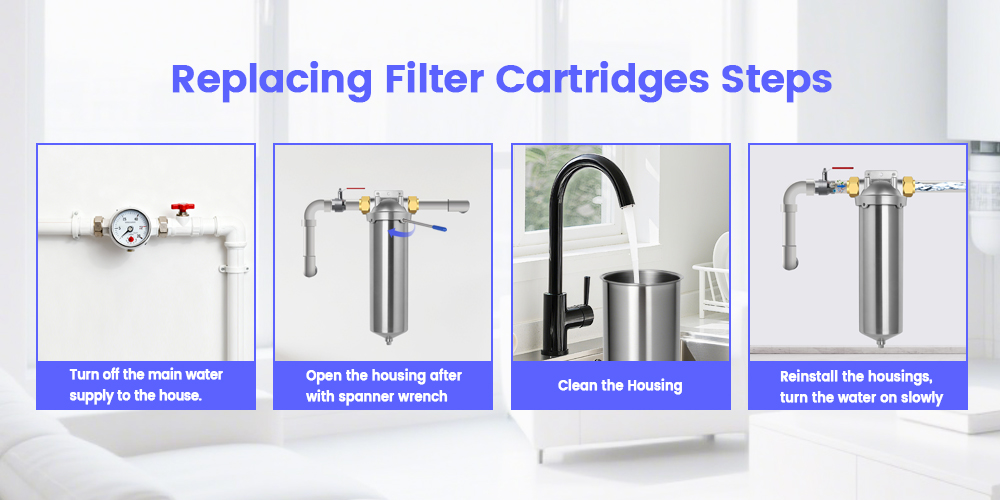
2. Clean the Housing: During every filter change, rinse out the filter housing to remove any slimy buildup or heavy sand that has settled at the bottom.
3. Check the Bypass Valve: Ensure your bypass valve is fully in the "service" position. A partially closed valve is a frequent cause of "unexplained" pressure drops.
2. Clean the Housing: During every filter change, rinse out the filter housing to remove any slimy buildup or heavy sand that has settled at the bottom.
3. Check the Bypass Valve: Ensure your bypass valve is fully in the "service" position. A partially closed valve is a frequent cause of "unexplained" pressure drops.
Troubleshooting Common Issues
If you've just changed your filter and the pressure is still low, check these three things:
• Trapped Air: Air pockets in the housing can restrict flow. Use the red pressure-relief button on top of your Amwater Filter Housing to bleed out the air until water spurts out.
• Backwards Installation: Ensure the water is flowing in the direction of the "In" and "Out" arrows on the filter head. Installing a system backwards will cause the filter to clog almost instantly.
• Faucet Aerators: Sometimes the "low pressure" isn't the filter at all. If a bit of sediment escaped during the filter change, it might be clogging the tiny screens (aerators) at your sinks.
• Trapped Air: Air pockets in the housing can restrict flow. Use the red pressure-relief button on top of your Amwater Filter Housing to bleed out the air until water spurts out.
• Backwards Installation: Ensure the water is flowing in the direction of the "In" and "Out" arrows on the filter head. Installing a system backwards will cause the filter to clog almost instantly.
• Faucet Aerators: Sometimes the "low pressure" isn't the filter at all. If a bit of sediment escaped during the filter change, it might be clogging the tiny screens (aerators) at your sinks.
The Impact of Water Filters on Pressure: The Verdict
So, do whole house water filters reduce water pressure? Yes, by a tiny, measurable margin—but they should never ruin your shower experience.
The benefits far outweigh the 2-3 PSI drop. By removing chlorine, heavy metals, and sediment, you are:
• Protecting your skin and hair from harsh chemicals.
• Preventing scale buildup in your water heater (which actually improves long-term pressure).
• Ensuring every glass of water in your home is delicious and safe.
The benefits far outweigh the 2-3 PSI drop. By removing chlorine, heavy metals, and sediment, you are:
• Protecting your skin and hair from harsh chemicals.
• Preventing scale buildup in your water heater (which actually improves long-term pressure).
• Ensuring every glass of water in your home is delicious and safe.
Conclusion
A whole house water filter is an essential upgrade for the modern home, providing peace of mind and superior water quality. While these systems do introduce a minor amount of resistance into your plumbing, proper sizing and maintenance from Amwater Filter ensure that your water pressure remains strong and steady.
Don't let the fear of low pressure stop you from enjoying pure water. By choosing the right High-Flow System and staying diligent with your replacement schedule, you can protect your family's health without sacrificing a single drop of performance.
Take Control of Your Home's Water Today. Visit Amwater Filter to explore our range of professional-grade filtration solutions designed for maximum flow and maximum purity.
Don't let the fear of low pressure stop you from enjoying pure water. By choosing the right High-Flow System and staying diligent with your replacement schedule, you can protect your family's health without sacrificing a single drop of performance.
Take Control of Your Home's Water Today. Visit Amwater Filter to explore our range of professional-grade filtration solutions designed for maximum flow and maximum purity.

Leave a comment
This site is protected by hCaptcha and the hCaptcha Privacy Policy and Terms of Service apply.