Water is the essence of life, but the tap water flowing into our homes isn't always as pure as it looks. From municipal treatment chemicals like chlorine to microscopic organic contaminants, various impurities can compromise the taste, smell, and safety of your drinking water.
When searching for the best way to purify your home’s water supply, carbon filtration consistently stands out as one of the most reliable and widely used technologies. But what exactly happens behind the scenes when water passes through a carbon block or activated carbon granules? More importantly, what does carbon filtration remove from water?
In this comprehensive guide, we will dive deep into the science of activated carbon, explore the specific contaminants it targets, discuss its limitations, and introduce you to the ultimate countertop filtration solution that combines carbon technology with gravity-fed convenience.
The Science Behind Carbon Filtration: How It Works
To understand what carbon filters remove, it helps to understand how they work. Activated carbon is typically derived from natural, carbon-rich materials such as wood, coal, or coconut shells. These source materials undergo a high-temperature activation process (often using steam or oxygen), which cracks open a massive network of microscopic pores.
This porous structure gives activated carbon an astonishing surface area. In fact, just one gram of activated carbon can have a surface area exceeding 3,000 square meters!
When water passes through the filter, contaminants are trapped through two primary mechanism methods:
- Physical Filtration (Mechanical Trapping): Large particles and sediments that are physically too big to pass through the pore network get stuck on the outside or within the deep channels of the filter.
- Adsorption: This is where the real magic happens. Adsorption (not to be confused with absorption) is a chemical reaction where gas or liquid molecules adhere to a solid surface. The carbon surface acts like a powerful magnet, attracting and chemically bonding with organic molecules and chemical impurities, pulling them completely out of your drinking water.
What Does Carbon Filtration Remove from Water?

Activated carbon is exceptionally efficient at targeting organic chemicals and common water treatment additives. Here is a detailed breakdown of the main contaminants a high-quality carbon filter eliminates:
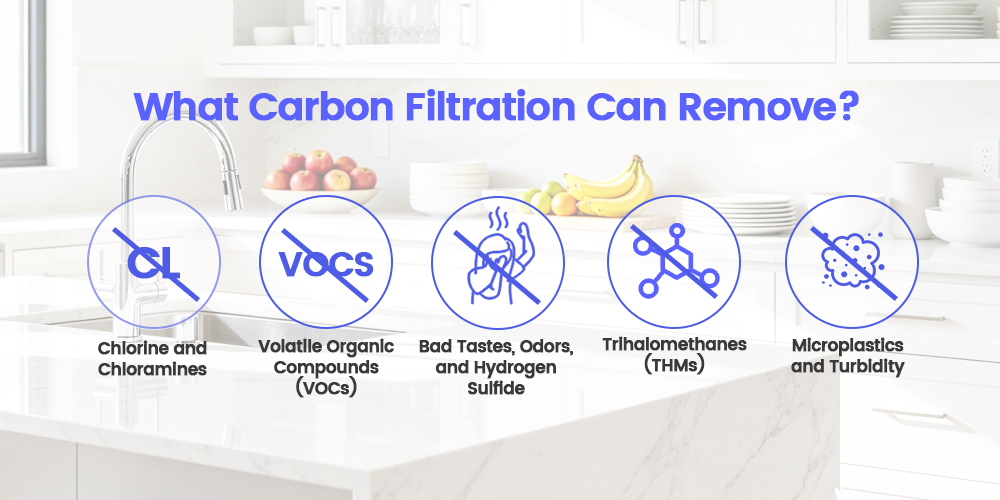
Chlorine and Chloramines
Municipal water treatment plants widely use chlorine and chloramines to disinfect water and kill harmful pathogens before it travels through city pipes. While essential for public health, these disinfectants leave behind a harsh, swimming-pool-like chemical taste and pungent odor. Carbon filtration is incredibly effective at reducing and neutralizing chlorine. The carbon reacts chemically with the chlorine, converting it into tasteless chloride ions, instantly restoring the natural, crisp taste of your water.
Volatile Organic Compounds (VOCs)
VOCs are carbon-based chemicals that evaporate easily at room temperature. They frequently find their way into groundwater and municipal supplies through industrial runoff, agricultural pesticides, herbicides, and household cleaning products. Common VOCs include benzene, trichloroethylene, and chlordane. Because VOCs are carbon-based, they easily bond with the activated carbon surface through adsorption, preventing these potentially toxic chemicals from reaching your glass.
Bad Tastes, Odors, and Hydrogen Sulfide
Have you ever turned on your tap only to be greeted by a foul "rotten egg" smell? This smell is usually caused by hydrogen sulfide, a naturally occurring gas in certain water tables. Carbon filters excel at capturing the compounds responsible for off-tastes and unpleasant odors, ensuring your water smells fresh and tastes clean.
Trihalomethanes (THMs)
When chlorine interacts with naturally occurring organic matter in water, it can create chemical byproducts known as Trihalomethanes (THMs), such as chloroform. Long-term exposure to elevated levels of THMs has been linked to health risks. Fortunately, activated carbon is highly rated for the reduction of these disinfection byproducts (DBPs).
Microplastics and Turbidity
Modern water supplies are increasingly threatened by microplastics—tiny plastic fragments that escape standard municipal filtration. Solid carbon block filters can mechanically trap microplastics down to their specific micron rating. Furthermore, carbon filtration reduces turbidity (cloudiness caused by suspended particles), leaving you with crystal-clear water.
Does Carbon Filtration Remove Bacteria and Cysts?
A common question many homeowners ask is whether carbon filters can safeguard their families against microbiological threats like bacteria, viruses, and parasitic cysts.
The short answer is: it depends on the micron rating and the advanced engineering of the filter.
Standard, loose granular activated carbon (GAC) filters found in basic pitcher filters do not remove bacteria. However, advanced solid carbon blocks engineered with a tightly compressed pore structure (specifically 0.2 to 0.5 microns) can physically trap dangerous microbiological contaminants. This includes parasitic cysts such as Giardia and Cryptosporidium, which are notorious for causing severe gastrointestinal illnesses and are highly resistant to standard chlorine disinfection.
What Carbon Filtration Does Not Remove
While activated carbon is a superpower in the water purification industry, it is not a silver bullet for every single contaminant. To manage expectations and ensure complete water safety, it is vital to know its limits. Carbon filters generally do not remove:
- Dissolved Inorganic Minerals: Healthy minerals like calcium, magnesium, and potassium do not bind to carbon. The good news? This means carbon filtration retains the beneficial, alkaline minerals that give water its natural taste.
- Heavy Metals (Unless Specially Modified): Standard carbon does not easily adsorb heavy metals like lead, arsenic, or copper. (Note: Premium systems often blend carbon with specialized media to tackle these metals).
- Fluoride and Total Dissolved Solids (TDS): Highly dissolved inorganic salts and minerals pass right through standard carbon pores.
Upgrade Your Hydration: The Power of Gravity Carbon Filtration
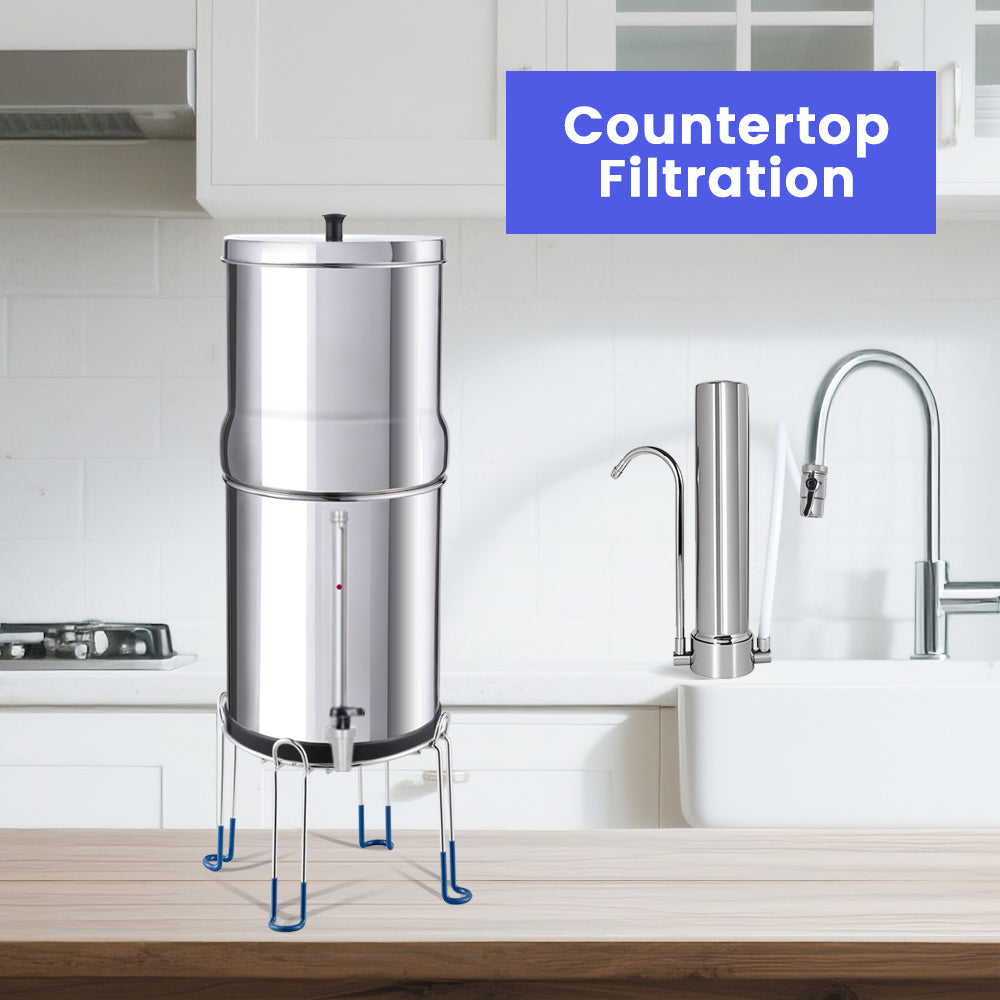
If you are looking for a reliable way to harness the benefits of carbon filtration without dealing with complicated under-sink plumbing installations or electrical wiring, a gravity-fed system is the perfect choice for your home.
At Amwater Filter, we have engineered a system that takes clean water to the next level. Our flagship Gravity Water Filter System utilizes premium-grade purification elements that combine the exceptional adsorptive properties of activated carbon with a micro-porous structure.
Why Choose the AMWater Filter Gravity System?
- Zero Electricity & No Plumbing Required: Simply pour tap water into the upper chamber, and let gravity do the work. It is perfect for countertops, offices, rentals, and emergency preparedness.
- Maximum Contaminant Reduction: It effectively addresses chlorine, bad odors, organic chemicals, and microscopic particulates, delivering clean taste and peace of mind with every pour.
- Long-Lasting Performance: Unlike flimsy pitcher filters that need changing every few weeks, our robust gravity elements are built to purify thousands of gallons before requiring a replacement, saving you time and money.
Final Thoughts: Pure Water Made Simple
Understanding what carbon filtration removes from water helps you make an informed decision about your family's health. By neutralizing harsh chemicals like chlorine, eliminating volatile organic compounds (VOCs), and stripping away foul tastes and odors, activated carbon transforms ordinary tap water into a premium hydration experience.
Are you ready to experience the difference that pure, chemical-free water can make in your daily life? Explore the Amwater Filter Gravity Water Filter System today and enjoy clean, delicious, and safe drinking water directly from your countertop.

Leave a comment
This site is protected by hCaptcha and the hCaptcha Privacy Policy and Terms of Service apply.