
Whether you're working in water treatment, food manufacturing, pharmaceuticals, chemical processing, or industrial production, maintaining clean liquids is essential for product quality and equipment performance. Even microscopic contaminants can reduce efficiency, damage machinery, or compromise the final product.
This is where Liquid Process Filters play a critical role.
Liquid process filters remove suspended solids, sediment, rust, scale, microorganisms, and other contaminants from liquids before they enter the next stage of production. They help manufacturers maintain consistent product quality, protect expensive equipment, reduce downtime, and meet industry standards.
In this beginner's guide, we'll explain everything you need to know about liquid process filters—from how they work and the different filter types to common applications and tips for selecting the right filtration system.
What Are Liquid Process Filters?
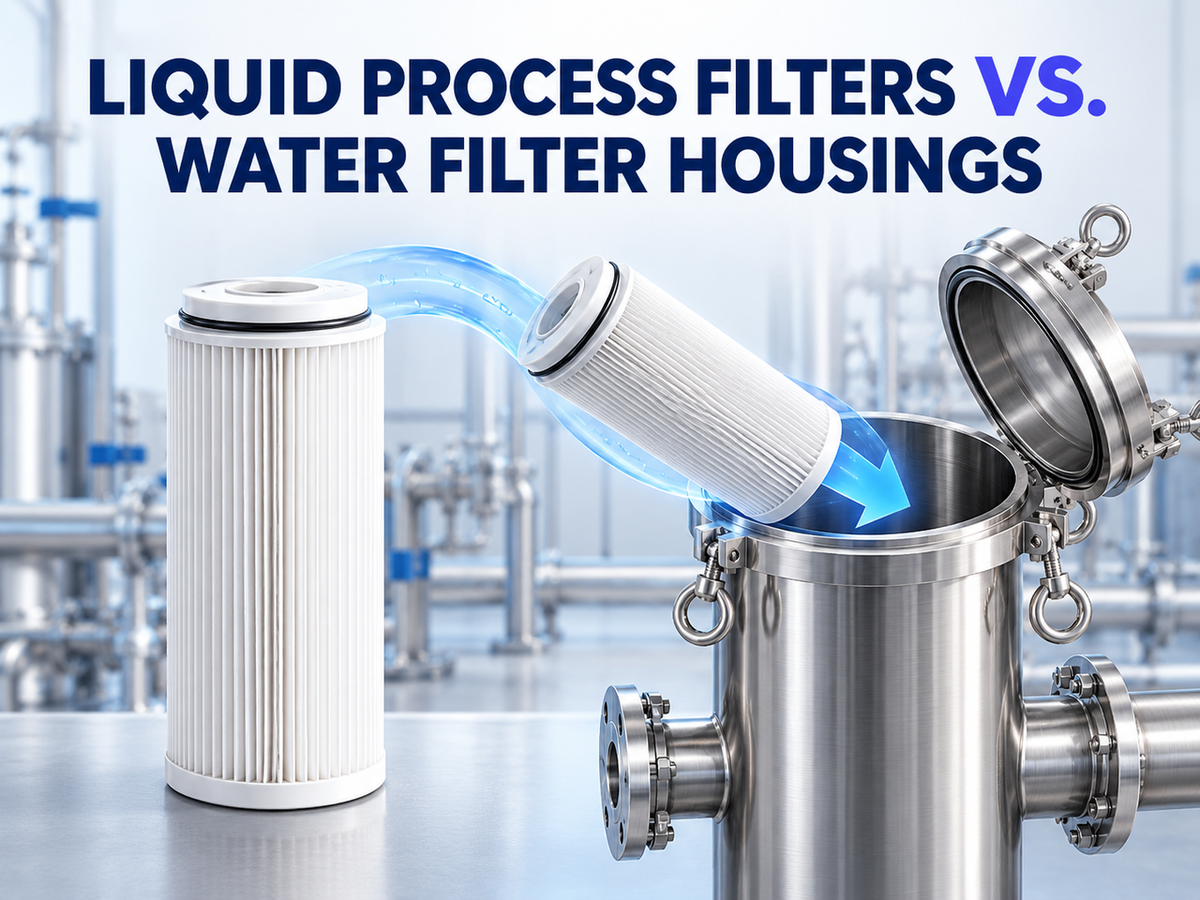
Liquid Process Filters are filtration devices designed to remove unwanted particles and impurities from liquids during industrial or commercial processing. Unlike drinking water filters that focus primarily on improving taste or odor, process filters are engineered to protect equipment, improve manufacturing efficiency, and ensure product consistency.
Depending on the application, these filters can be removed:
- Sand and sediment
- Rust particles
- Scale
- Metal debris
- Organic matter
- Fine suspended solids
- Bacteria and microorganisms
- Process contaminants
The filtration level can range from several hundred microns down to less than one micron, depending on the industry and production requirements.
Why Are Liquid Process Filters Important?
Some of the most common issues include:
- Equipment wear and damage
- Pump and valve failures
- Pipe blockages
- Poor product quality
- Higher maintenance costs
- Increased production downtime
- Regulatory compliance issues
Installing the right liquid filtration system helps businesses:
- Extend equipment lifespan
- Improve production efficiency
- Reduce operating costs
- Maintain consistent product quality
- Meet hygiene and safety standards
- Lower maintenance frequency
For industries where precision matters, filtration is not optional. It is an essential part of the manufacturing process.
How Do Liquid Process Filters Work?
Although different filter designs operate differently, the basic filtration process is straightforward.
Step 1: Contaminated Liquid Enters the Filter
The liquid flows into a filter housing under pressure or gravity.
Step 2: Filtration Media Captures Particles
As the liquid passes through the filter media, contaminants larger than the filter's micron rating are trapped.
Depending on the filter type, contaminants may remain on the surface or become embedded within the filter material.
Step 3: Clean Liquid Exits
The filtered liquid continues downstream while unwanted particles remain inside the filter until replacement or cleaning.
The finer the micron rating, the smaller the particles that can be removed.
Common Types of Liquid Process Filters
Different applications require different filtration solutions. Here are the most common types.
1. Cartridge Filters
Cartridge filters are one of the most widely used liquid filtration solutions. They are compact, easy to replace, and available in various micron ratings.
Typical applications include:
- Water treatment
- Food processing
- Beverage production
- Pharmaceutical manufacturing
- Chemical processing
For smaller commercial or residential systems, durable filter housings are equally important. The AMwater 10-Inch Water Filter Housing provides a reliable enclosure for standard filter cartridges, making maintenance simple while ensuring consistent filtration performance.
2. Sediment Filters
Sediment filters remove visible particles such as:
- Dirt
- Sand
- Rust
- Silt
- Debris
They are often installed as the first stage of a filtration system to protect downstream equipment.
Industries frequently use sediment filters before:
- Reverse osmosis systems
- UV sterilizers
- Activated carbon filters
- Precision filtration equipment
3. Bag Filters
Bag filters handle larger flow rates and higher contaminant loads than cartridge filters.
They are commonly used in:
- Chemical plants
- Industrial cooling systems
- Paint manufacturing
- Water pretreatment
Their large dirt-holding capacity reduces replacement frequency.
4. Membrane Filters
Membrane filters provide extremely fine filtration.
These filters are capable of removing:
- Bacteria
- Viruses
- Colloids
- Ultra-fine particles
Membrane technologies include:
- Microfiltration (MF)
- Ultrafiltration (UF)
- Nanofiltration (NF)
- Reverse Osmosis (RO)
5. Spin Down Filters
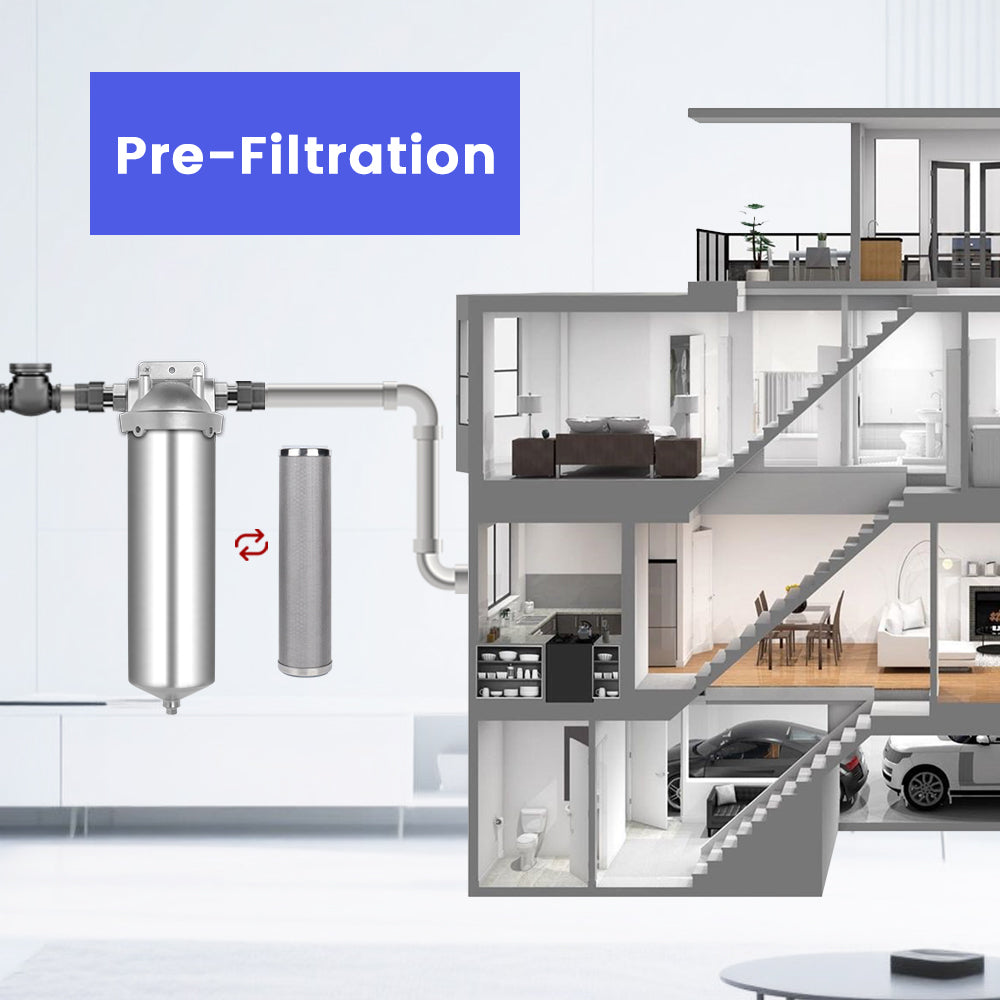
Spin down filters are reusable pre-filters designed to capture coarse sediment before it reaches more delicate filtration stages.
They are ideal for removing:
- Sand
- Rust flakes
- Large sediment
- Pipe debris
Because they can be flushed and reused, they help extend the life of downstream filter cartridges while reducing maintenance costs.
Understanding Micron Ratings
One of the most important specifications when selecting a liquid process filter is the micron rating.
A micron (μm) is one-millionth of a meter.
Typical filtration ranges include:
| Micron Rating | Removes |
| 100 μm | Large sediment, sand |
| 50 μm | Fine sand |
| 20 μm | Rust particles |
| 10 μm | Silt, coarse sediment |
| 5 μm | Fine sediment |
| 1 μm | Very fine particles |
| 0.2 μm | Many bacteria |
Choosing the correct micron rating depends on the sensitivity of your process and the quality of the incoming liquid.
Industries That Use Liquid Process Filters
Liquid process filtration is essential across a wide range of industries.
Water Treatment
Municipal and commercial water systems rely on filtration to remove suspended solids before further purification.
Food & Beverage
Filtration helps maintain product consistency while protecting production equipment from contamination.
Pharmaceutical Manufacturing
Strict filtration standards ensure sterile production environments and product safety.
Chemical Processing
Chemical manufacturers use process filters to remove particles that could interfere with reactions or damage equipment.
Electronics Manufacturing
Ultra-clean liquids are required during semiconductor and electronic component production.
Oil & Gas
Filtration protects pumps, valves, and pipelines from abrasive contaminants.
How to Choose the Right Liquid Process Filter
Selecting the best filtration solution requires evaluating several key factors.
Identify the Contaminants
Determine whether you're removing:
- Sediment
- Metal particles
- Organic material
- Microorganisms
- Chemical impurities
Consider Flow Rate
Higher flow rates require filters with greater capacity to avoid pressure loss.
Choose the Correct Micron Rating
The finer the filtration, the smaller the particles removed, but finer filters may require more frequent maintenance.
Evaluate Chemical Compatibility
Ensure the filter media and housing materials are compatible with your process liquid.
Maintenance Requirements
Reusable filters reduce operating costs, while disposable cartridges often provide finer filtration.
Common Signs That Your Filter Needs Replacement
Over time, all filters become loaded with contaminants.
Watch for these warning signs:
- Reduced water flow
- Pressure drop
- Increased operating costs
- Poor product quality
- Visible sediment downstream
- Frequent equipment clogging
Replacing filters before complete blockage helps maintain consistent system performance.
Why Choose AMwater?
At AMwater, we understand that reliable filtration is essential for efficient operations.
Our filtration solutions are designed to provide:
- High-quality filtration performance
- Durable construction
- Easy maintenance
- Long service life
- Reliable protection for downstream equipment
Whether you're upgrading an industrial process or improving a commercial water filtration system, AMwater offers dependable solutions to support cleaner, more efficient operations.
Final Thoughts
Liquid process filters are a fundamental component of modern industrial and commercial filtration systems. By removing unwanted contaminants, they help protect equipment, improve product consistency, reduce maintenance costs, and support efficient production.
Whether you're designing a new filtration system or upgrading an existing one, understanding filter types, micron ratings, and application requirements is the first step toward selecting the right solution.
For dependable filtration products and expert support, AMwater provides reliable solutions designed to meet the demands of a wide range of water treatment and industrial filtration applications.

Leave a comment
This site is protected by hCaptcha and the hCaptcha Privacy Policy and Terms of Service apply.